
Uterine Fibroid Treatment
Fibroid Uterus Treatment In Chennai
We work in Interventional Radiology, which basically means image-guided, minimally invasive care aimed at the fibroid itself instead of the whole uterus. Under Dr. Arjunlokesh Netaji, we do Uterine Fibroid Embolization, or UFE — shrinking fibroids by cutting off their blood supply through a single small catheter, no open incision involved.
Something patients almost never expect going in: timing changes what's on the table. A fibroid caught early responds to more treatment options than one that's been left alone for years, quietly growing. So before we get into what fibroid uterus treatment in Chennai actually looks like day to day, it's worth backing up a bit — what fibroids actually are, and why they show up in the first place.
What Are Uterine Fibroids?
Uterine fibroids are benign growths, not cancer, that form in or around the muscular wall of the uterus. They're a lot more common than most people think. A surprising number of women carry one at some point without ever finding out, since not every fibroid causes symptoms.
They tend to get grouped by where they sit:
Most show up in women in their 30s and 40s, though they can start earlier or show up later too. Nobody fully understands what triggers them, but estrogen and progesterone are clearly involved somehow, which is probably part of why fibroids shrink once menopause hits.
Some women go their whole lives without a fibroid ever bothering them. For others, it quietly takes over daily life — the bleeding, the fatigue, planning your week around your cycle. That gap is really what decides whether treatment makes sense.
Symptoms of Uterine Fibroids
How much a fibroid affects you tends to depend on its size, how many there are, and exactly where they're sitting — and honestly, that's the first thing we look at when someone comes in asking about uterine fibroids treatment in Chennai. What we hear most from patients:
A lot of women live with a milder version of this for years before deciding to get checked out. If bleeding or pain has started running your calendar, that's usually the sign it's time.
Causes & Risk Factors
There isn't one single cause. But a handful of things tend to raise the odds:
Hormones seem to matter most — estrogen and progesterone both appear to drive fibroid growth. Genetics plays a role too; fibroids often run in families, so if your mother or a sister has had one, your own odds go up. Weight is a factor, and so is age — risk climbs through your 30s and 40s and then tends to drop off after menopause. Starting your periods younger has also been linked to higher risk, and diet or activity levels may contribute a bit, though probably less than the others.
None of this guarantees anything, one way or the other. Plenty of women with zero risk factors still end up with fibroids, which is exactly why we look at your actual scans and symptoms rather than working off a checklist.
When Should You Get Evaluated?
Not every fibroid needs treatment — plenty are small, symptom-free, and just get monitored over time. That said, this is one of the more common misconceptions we run into with women researching fibroid uterus treatment in Chennai: assuming a diagnosis automatically means a procedure. It doesn't. But some situations do call for a closer look sooner rather than later:
Getting evaluated doesn't commit you to anything. It just gives us both a clearer picture before deciding what, if anything, comes next.
Why Patients Choose Us
Among the best doctor for fibroid treatment in Chennai, what tends to set us apart is fairly simple — we start with Interventional Radiology, not the operating table. Every procedure runs on real-time imaging for precision. Your plan gets built around your fibroid's size, number, and location, not some standard protocol pulled off a shelf. We preserve the uterus wherever that's medically reasonable, most procedures are done as day-care treatments, and recovery is measured in days rather than the weeks that come with open surgery. No major incision, and not much pain afterward either.
A lot of the women who search for the best doctor for fibroid treatment in Chennai are hoping, reasonably, to avoid a hysterectomy or myomectomy if there's a decent alternative. For a fair number of them, there is one.
Our Uterine Fibroids Treatment In Chennai
Uterine Fibroid Embolization (UFE)
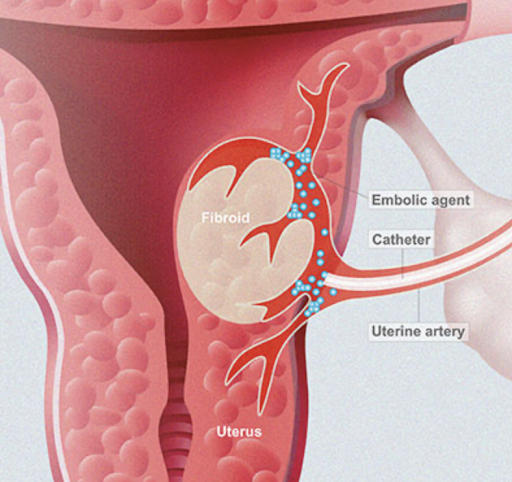
UFE is really the centerpiece of our uterine fibroids treatment in Chennai. Here's how it actually plays out: a thin catheter goes in through a small puncture in the wrist or groin and gets guided, under imaging, straight to the arteries feeding the fibroid. Small particles are released there to block that blood supply. Cut off from it, the fibroid shrinks gradually over the following weeks and months, while the rest of the uterus keeps getting blood from other vessels the way it normally would.
Because nothing gets cut into the uterus itself, it stays intact — completely. That's the main thing that separates this from surgical removal, and honestly it's usually the reason patients ask about it by name once they've done a bit of their own research.
Uterine Artery Embolization (UAE)
Same basic idea, but aimed directly at the uterine arteries. It tends to suit women with multiple fibroids, or ones that would be genuinely hard to reach surgically, and it's usually a single outpatient procedure.
What actually decides the right path for any individual patient: fibroid size and number, where they're located, how severe the symptoms are and what kind they are, your age, and whether you're planning future pregnancies. We go through all of it with you before recommending anything specific — there's really no single answer that fits everyone, whatever a quick search might suggest.
Uterine Fibroid Treatment Without Surgery
For a lot of patients, uterine fibroid treatment without surgery isn't just possible — it ends up being the better call. Surgery, whether it's myomectomy or hysterectomy, means a longer recovery, a visible incision, and with hysterectomy, the permanent end of fertility.
UFE offers a different trade-off entirely: a shorter procedure, usually a same-day or overnight stay, recovery measured in days instead of weeks. The long-term outcomes are well documented at this point, and most patients see real, lasting improvement in bleeding and pressure symptoms.
Surgery still has its place, to be clear. For very large fibroids, certain locations, or specific fertility plans, it may genuinely be the better option. Uterine fibroid treatment without surgery just shouldn't get dismissed before it's even discussed — which, unfortunately, still happens more than it should.
Benefits of the Minimally Invasive Route
How We Diagnose
Getting the diagnosis right shapes everything after it — it's really the starting point for any uterine fibroids treatment in Chennai we go on to recommend. Our workup usually covers:
We don't rush any of this. A clear diagnostic picture is the difference between a plan that actually works for you and one that just sort of fits, and it's honestly a big part of why patients keep pointing others toward us as among the best doctor for fibroid treatment in Chennai.
What Recovery Looks Like
Most patients stay one night in hospital, some go home the same day. Recovery details:
Why Not Wait?
Fibroids tend to grow slowly, and symptoms usually follow the same pattern — mild at first, more disruptive later. Dealing with them earlier generally means:
We'd rather see you while things are still manageable than wait until they're not — that's really the whole philosophy behind how we approach uterine fibroids treatment in Chennai.
Surgery vs. UFE, Side by Side
| Aspect | Traditional Surgery (Myomectomy/Hysterectomy) | Uterine Fibroid Embolization (UFE) |
|---|---|---|
| Hospital stay | 2–5 days | Overnight or same-day |
| Incision | Abdominal incision | Needle-sized puncture only |
| Recovery | 4–6 weeks | 1–2 weeks |
| Pain | Higher, post-operative | Mild, manageable cramping |
| Blood loss | Higher, sometimes needs transfusion | Minimal |
| Fertility | Depends on procedure; hysterectomy ends it | Uterus preserved in all cases |
| Return to work | 4–6 weeks | Typically 1–2 weeks |