
Neurovascular Interventions
Brain Aneurysms: Endovascular Coiling & Flow diverters
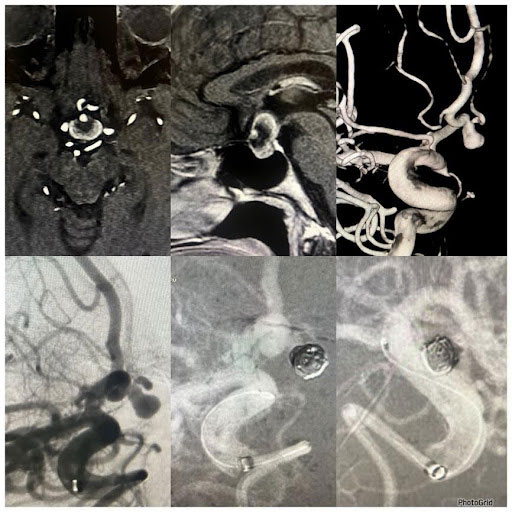
This image is from a 33 year old lady who had a large brain aneurysm who came with complaints of severe headache with problems in vision. Patient underwent Endovascular coiling and was discharged within 5 days after surgery with nil headache & remarkable recovery of visual fields & color vision.
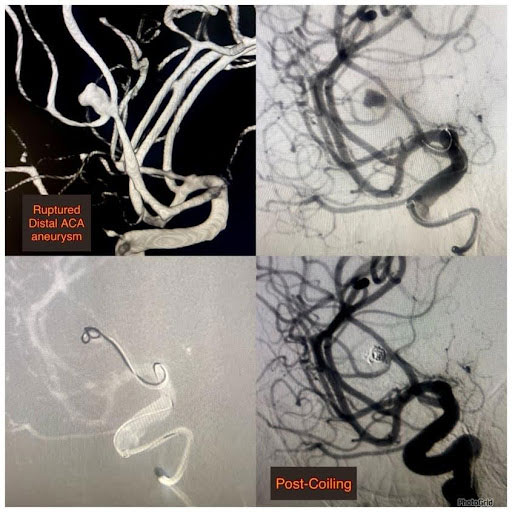
This image is from a 33 year old lady who had a large brain aneurysm who came with complaints of severe headache with problems in vision. Patient underwent Endovascular coiling and was discharged within 5 days after surgery with nil headache & remarkable recovery of visual fields & color vision.
>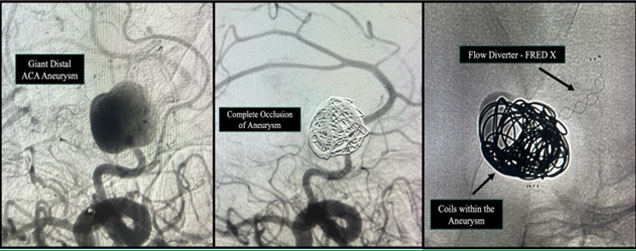
This image is from a 55 year old female who presented with severe headache and transient weakness of both legs. She was diagnosed to have unruptured giant brain aneurysm. She was treated with Flow Diverter insertion + Endovascular coiling of the giant aneurysm. Image shows the complete occlusion of the aneurysm after the procedure.
Stroke- Paralysis of limbs: Endovascular Mechanical thrombectomy
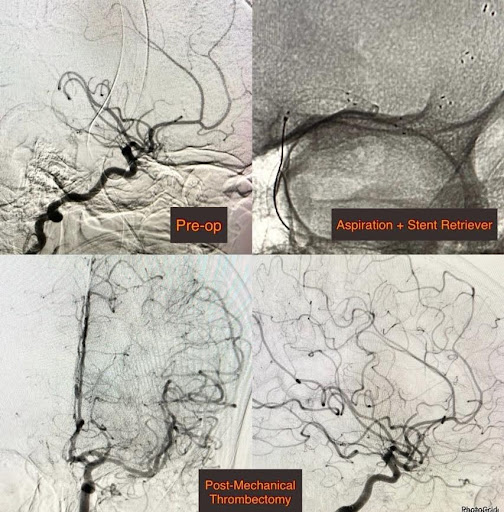
This image is from a 31-year-old male who came with sudden paralysis of right hand & leg with speech problems. Patient underwent thrombolysis (medication to lyse the clot) and subsequently underwent endovascular mechanical removal of the clot in the blood vessel in the brain. After procedure, patient had complete recovery of power in hands & legs with complete recovery of speech. Discharged after 3 days of procedure.
Recurrent attacks of paralysis: Carotid artery stenting
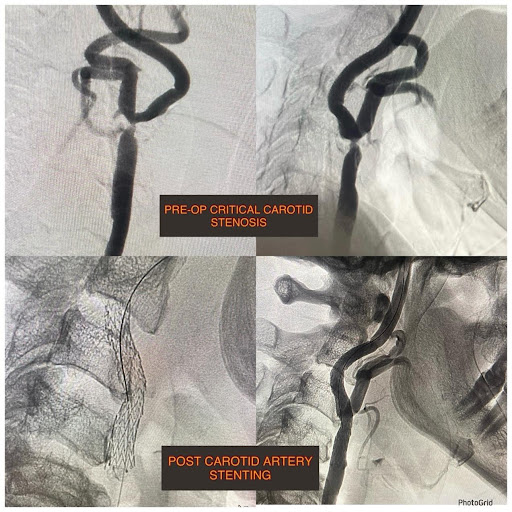
This image is from a 65-year-old male who presented with repeated paralysis attacks of his right hand with numbness. He was diagnosed with left carotid critical stenosis and was successfully treated with carotid artery stenting. Patient had no repeat episodes of paralysis attack after stenting.
Brain & Spinal Arteriovenous Malformations (AVM) & Dural AV Fistula: Embolization
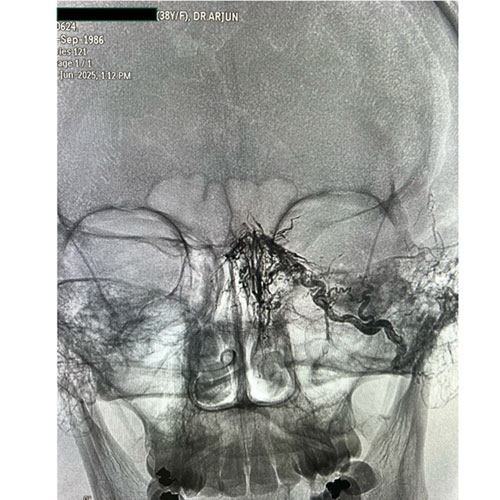
This image is from a 38-year-old female who came to us in a critical condition with altered sensorium & poor neurological status. She was diagnosed with ruptured dural arterio-venous fistula for which we proceeded with embolization. Image shows the liquid embolic cast in the arterial feeders, nidus & venous footplate of the disease. Patient had good recovery in the post-operative period.
Pre-operative Tumor Embolization
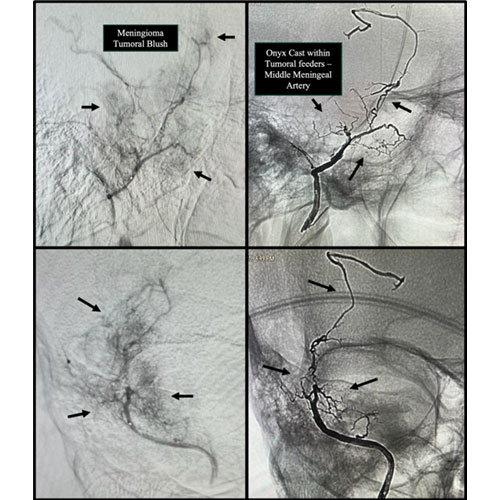
This image is from a 54-year-old female who had a large meningioma in the brain which is a tumor of the protective covering of the brain. Due to the high risk of profuse intra-operative bleeding, we embolized the tumoral blood supply 1 day prior to the surgical removal and the patient had a minimum intra-operative blood loss.