
Fibroid Treatment Without Surgery in Chennai: Can You Avoid a Hysterectomy?
"You'll need a hysterectomy." That's the line so many women hear after a fibroid scan. Nobody really explains what led there.
By the time heavy bleeding and pelvic pressure take their toll, most just accept it — without asking if there's another route.
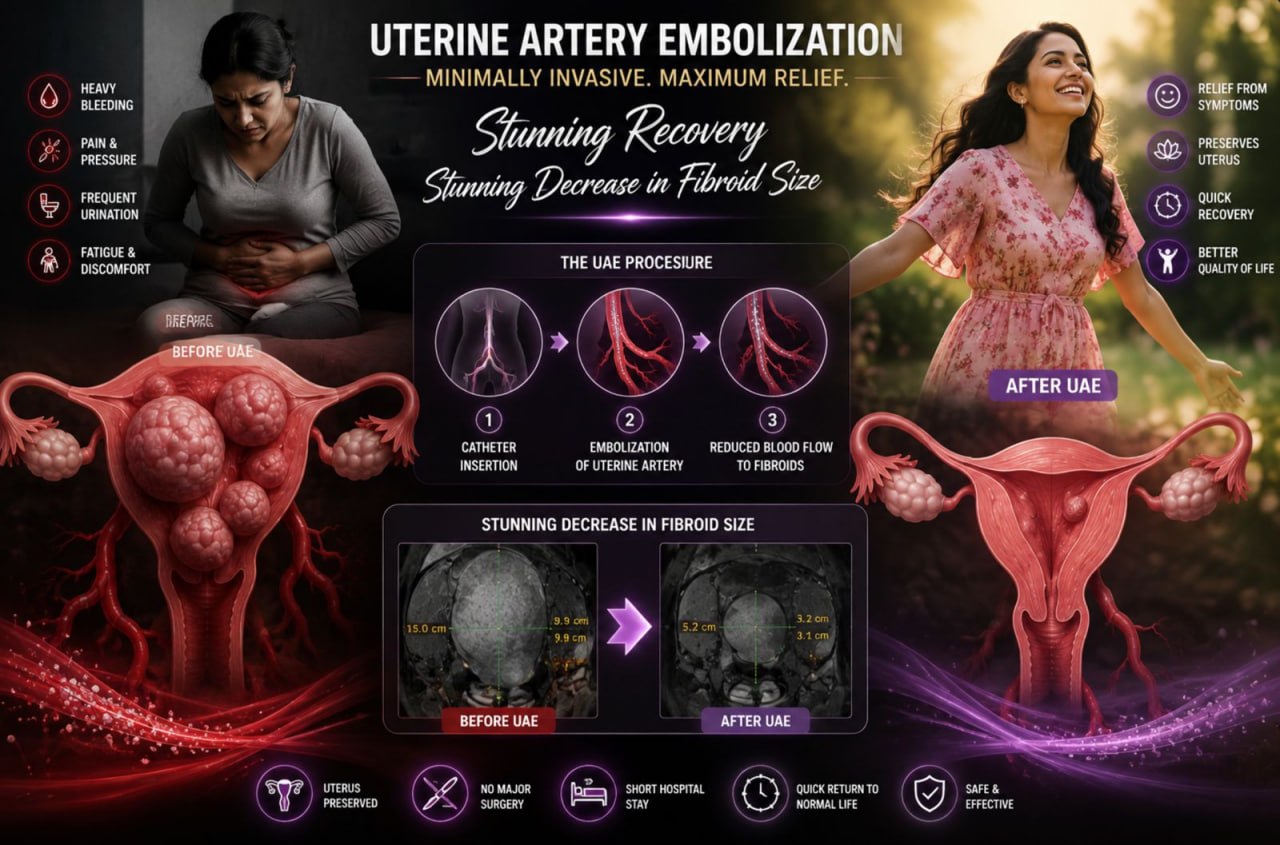
Here's what doesn't come up enough: surgery isn't the only answer. Fibroid treatment without surgery in Chennai is possible through Uterine Fibroid Embolization, or UFE for short.
Dr. Arjunlokesh Netaji sees this gap often — patients headed straight for surgery, with nobody mentioning UFE first.
What Is Uterine Fibroid Embolization (UFE)?
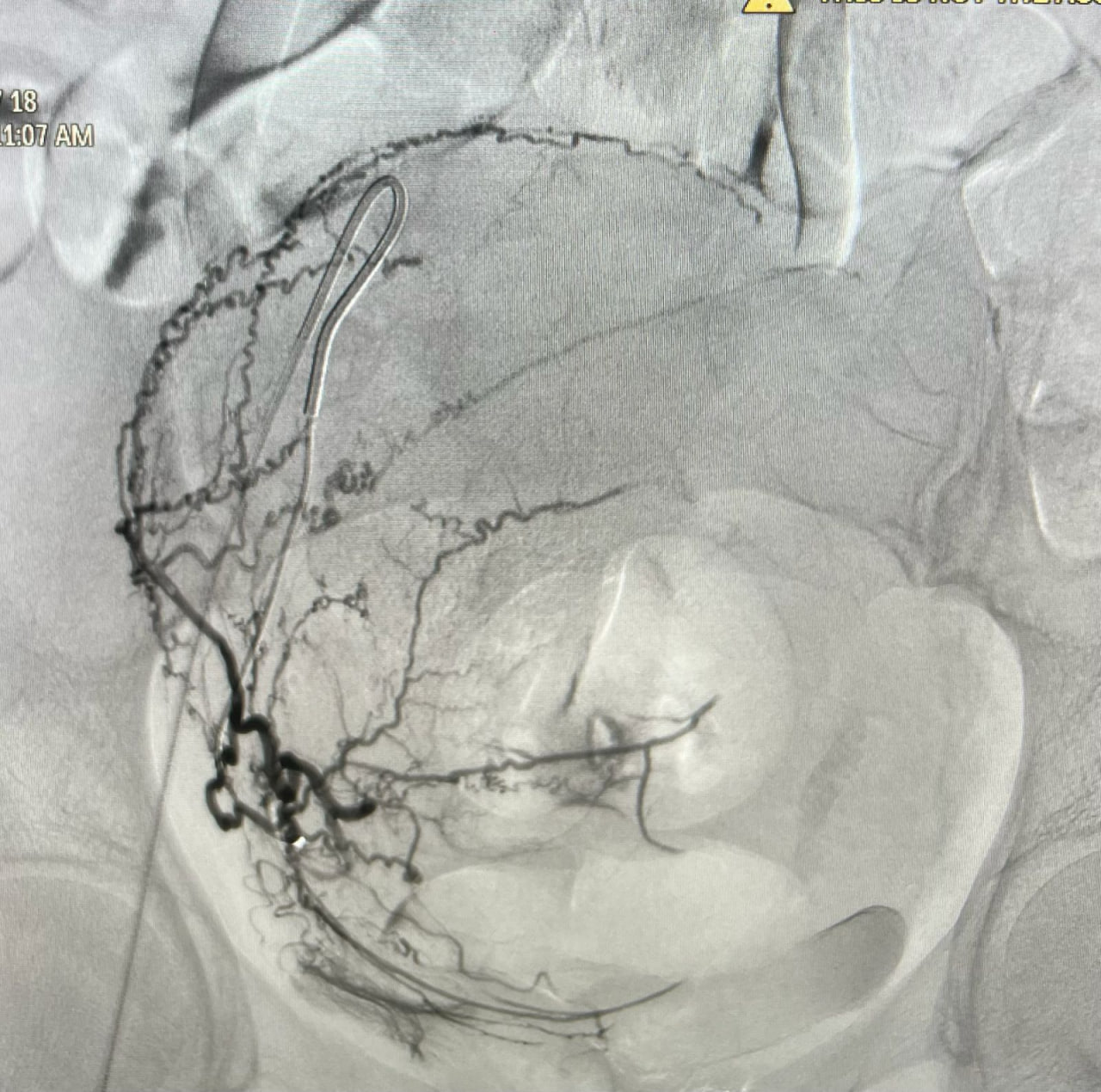
The logic behind UFE is simple. Fibroids need blood supply to keep growing. Cut that off, and they shrink on their own.
Broadly, here's what happens on the table:
-
A thin catheter goes in through a small puncture, usually the wrist or groin
-
It's guided through the blood vessels straight to the fibroid
-
Tiny particles are released there to block blood flow to just that spot
-
Everything else around it stays untouched
No large cuts. No uterus removal. Most of the procedures are done with a local anesthetic injection only. That's why it's grouped under non-surgical fibroid treatment instead of surgery.
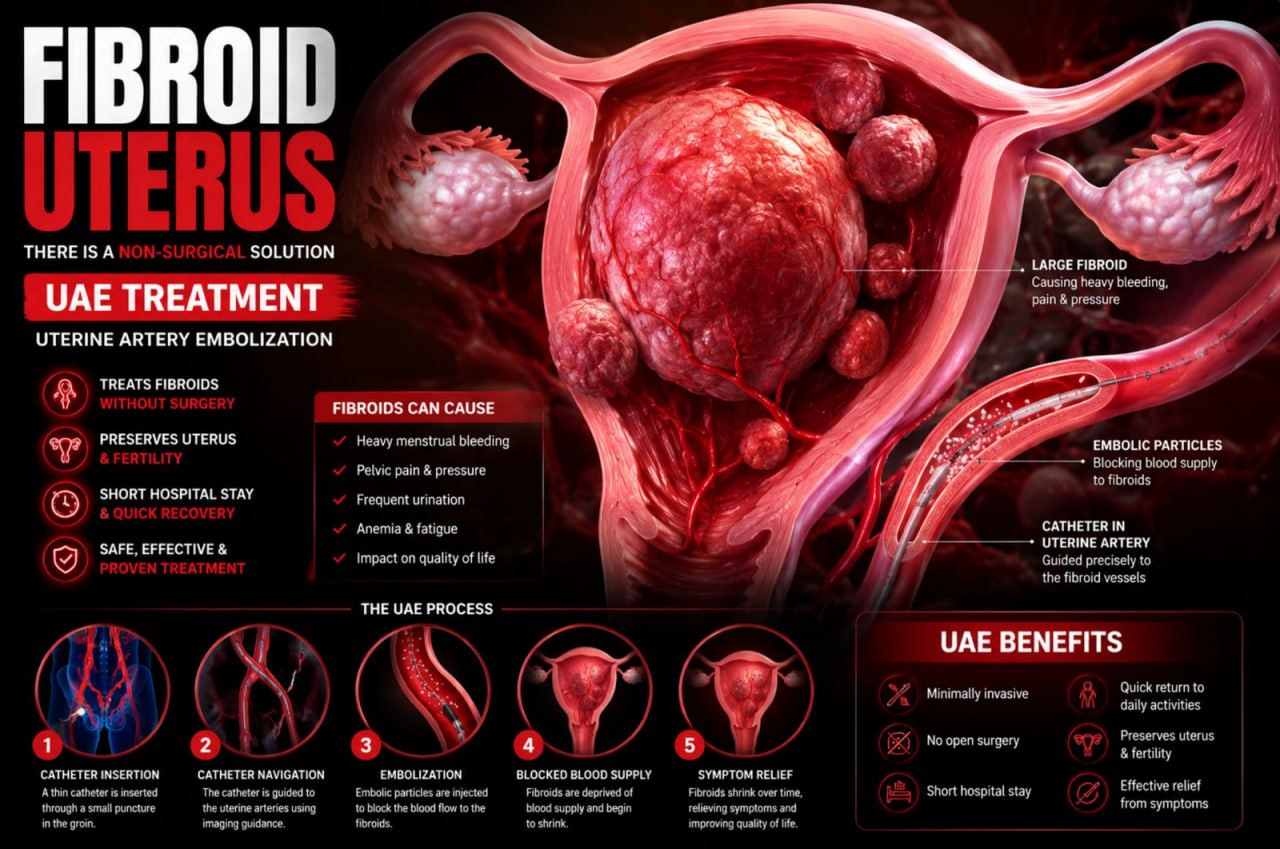
UFE vs Hysterectomy: A Simple Comparison
A table usually makes this clearer than paragraphs of explanation.
|
What |
UFE (Non-Surgical) |
Hysterectomy |
|
Type of procedure |
Catheter-based, no cutting |
Open major surgery |
|
Anesthesia |
Local, with sedation |
General anesthesia |
|
Hospital stay |
Usually 1 day, sometimes overnight |
Typically 2-5 days |
|
Recovery time |
In less than a week's time |
Typically 4-6 weeks |
|
Scar |
No scar mark |
Visible surgical scar |
|
Uterus kept? |
Yes |
No |
|
Back to work |
In less than a week's time |
Typically 4-6 weeks |
These are typical ranges, not guarantees. Actual recovery depends on your case.
Do All Fibroids Need Treatment?
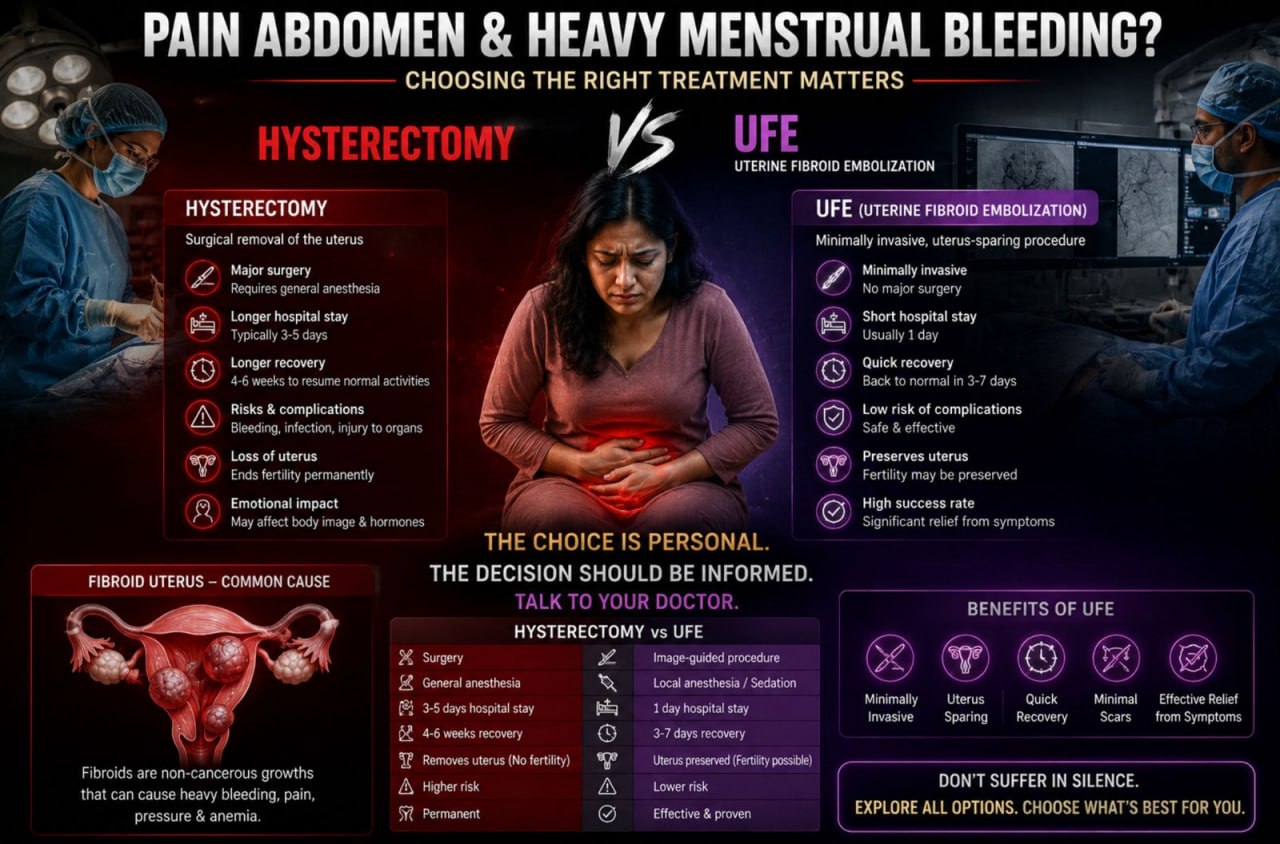
Not necessarily. If fibroids aren't causing symptoms, many doctors recommend "watchful waiting" instead.
This means regular check-ups to track fibroid size, without rushing into surgery or a procedure. Treatment usually comes into the picture once symptoms — bleeding, pain, pressure symptoms— actually start affecting daily life.
Who Can Go for This Treatment?
Not everyone qualifies, and no honest doctor pretends otherwise. Generally, UFE tends to suit women who:
-
Deal with heavy bleeding, pain, or pressure from fibroids
-
Would rather skip major surgery or general anesthesia
-
Want to keep their uterus
-
Don't have an active infection or suspected malignancy
Thinking about pregnancy down the line? Bring that up directly with your doctor — it changes the conversation.
What Happens During and After the Procedure?
Most of the anxiety here comes from not knowing what to expect. A rough timeline:
-
The procedure generally takes about 1 to 2 hours, depending on the case
-
You're sedated, not fully asleep; discomfort is usually mild to nil.
-
A day or so of cramping afterward is fairly common, and medication takes care of it
-
Discharge happens either the same evening or after staying overnight
-
Getting back to light day-to-day activity within a week is typical
-
The fibroid keeps shrinking gradually over the following months
A follow-up scan later helps confirm how well things are progressing.
Signs Doctors Watch For Before Considering a Hysterectomy
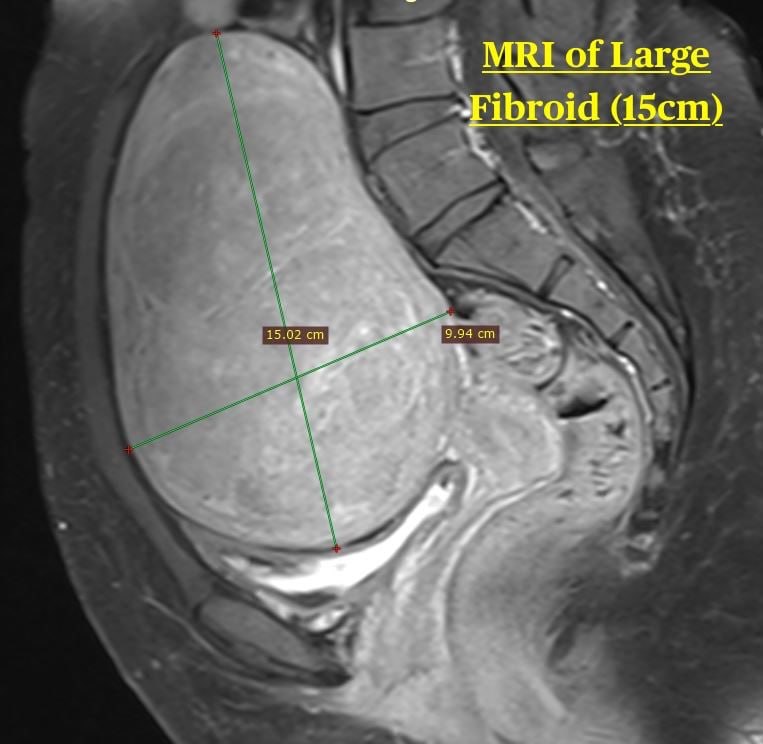
Not every fibroid case pushes toward hysterectomy. But a few patterns tend to make doctors lean that way:
-
Fibroids that are unusually large or numerous
-
Bleeding heavy enough to cause anemia
-
Fibroids that keep growing despite other treatments
-
Persistent pain or pressure affecting daily life
-
A patient who is done having children and prefers a definitive solution
Even then, hysterectomy isn't automatically the first suggestion. Sometimes a hormonal imbalance is part of the picture, and Dr. Arjunlokesh Netaji may bring in a Thyroid Specialist In Chennai before deciding.
That's also why less invasive routes — medication, hormone therapy, or UFE — are usually discussed first, especially for women who want to keep their uterus or plan a future pregnancy.
What to Check Before Choosing a Doctor
Not every radiologist performs UFE regularly, and experience matters a lot here. Dr. Arjunlokesh Netaji suggests checking for:
-
Formal training in Vascular Interventional Radiology
-
Real, hands-on experience with UFE specifically
-
Access to proper imaging and catheter equipment
-
A doctor who reviews your case individually, not the same script for everyone
Your scans and symptoms should drive the decision, not a brochure. A doctor worth seeing tells you clearly what UFE can realistically do, and where it falls short.
FAQs
Is a Hysterectomy Necessary for Every Fibroid Case?
Not always. It really comes down to fibroid size, location, and how much they're affecting your daily life. Plenty of cases respond well to less invasive options like Uterine Fibroid Treatment Without Surgery, especially when there's no active infection or suspected malignancy involved.
How Much Does Non-Surgical Fibroid Treatment Cost in Chennai?
Depends on case complexity and fibroid count. Factoring in shorter hospital stay and recovery, it's often close to, or cheaper than, hysterectomy. Exact numbers need a consultation.
Can Fibroids Come Back After a Hysterectomy?
No — once the uterus is removed, there's nowhere left for a fibroid to grow. That's what makes hysterectomy a permanent fix. The trade-off is that it's irreversible, which is exactly why less invasive, uterus-sparing options like UFE are worth discussing before ruling anything out.
How Does Recovery Actually Progress After UFE?
Day 1 is hardest, with mild cramping managed by medication. Energy returns by day 2–3. Light routines resume within a week. More on our UFE procedure page.
Will Fibroids Come Back After UFE?
Once the blood supply is cut off, that particular fibroid usually stays shrunk for good. New ones showing up years down the line is possible though, so your doctor will likely want to see you for periodic scans.
Can UFE Affect the Ability to Get Pregnant Later?
Sometimes, yes, but not always— it really comes down to how large the fibroids are, how many there are, and where exactly they're located. Anyone still planning a pregnancy should raise this with their doctor before agreeing to UFE, not after.
Making an Informed Decision
Surgery isn't automatically the next step just because that's what most of us grew up believing. A proper evaluation decides this — not a friend's experience or something a relative was told years ago.
Two women can have the exact same symptoms and completely different scans underneath.
If you're weighing your options, booking a consultation with Dr. Arjunlokesh Netaji at Chennai is a good next ste