
Varicose Vein Treatment Without Surgery: Why More Patients Are Choosing Non-Surgical Care
Written & Medically reviewed by Dr. Arjunlokesh Netaji, MD, DM (Interventional Radiology), EBIR — Consultant Neuro & Vascular Interventional Radiologist, Chennai.
Tired of Living with Painful Varicose Veins?
Most people write off varicose veins as a cosmetic problem. Something to cover up with trousers rather than a medical issue. But anyone who actually has them knows better. There's the aching by evening, the swelling around the ankles, the heaviness that creeps in after standing all day. That's not vanity — that's a vein that isn't doing its job.
The good news: surgery isn't the only answer anymore, and hasn't been for a while. With Varicose Veins Treatment Without Surgery at Chennai, minimally invasive options now let patients get treated and get on with their lives, often within the next day of the procedure.
At Dr. Arjunlokesh's clinic, the process doesn't begin with the veins you can see. It begins with why they're there. Making the bulge disappear is easy enough — figuring out what's actually causing it, and fixing that, is what keeps it from coming back.
If you're looking into Varicose Veins Treatment In Chennai, here's what actually matters before you decide on anything.
Why Varicose Veins Show Up?
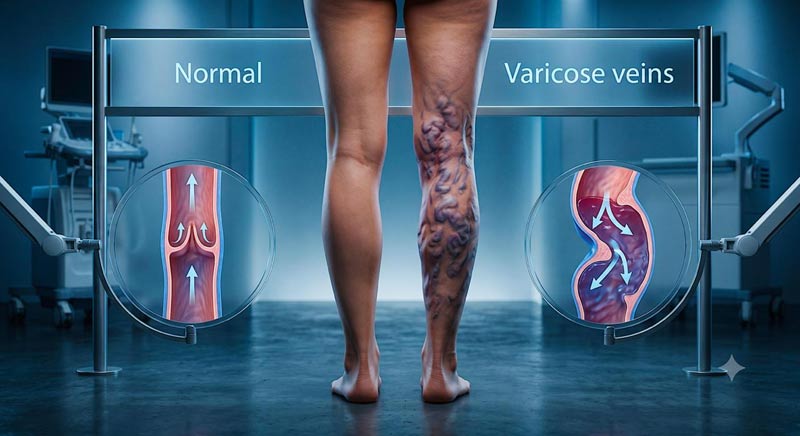
Veins move blood back toward the heart using a series of tiny valves that only open one way. When those valves weaken, blood doesn't flow forward the way it should — it pools instead. Pressure builds, the vein wall stretches, and over time you get the twisted, bulging veins that are hard to miss.
A few things tend to push this along:
- Standing for long stretches at work
- Sitting for hours without moving
- Pregnancy
- Extra body weight
- Family history of the condition
None of this happens overnight. It builds slowly, which is exactly why so many people ignore it until it's harder to treat. Left alone long enough, varicose veins can lead to skin changes, ulcers, even bleeding.
Symptoms People Tend to Brush Off
There's a pattern with most patients — they wait until things get bad before booking an appointment. Which is a shame, because early treatment tends to be a lot simpler.
Signs worth taking seriously:
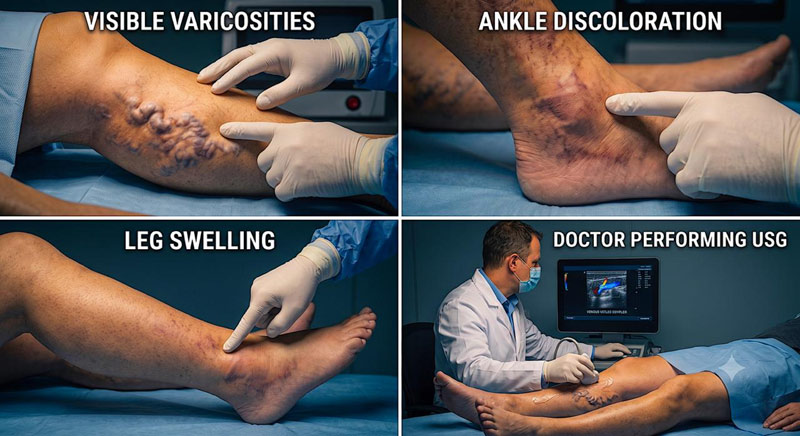
- Veins that are visibly swollen or twisted
- Legs that ache or feel heavy by evening
- Swelling around the ankles
- Cramps at night
- A burning or throbbing sensation
- Itching near the vein
- Skin darkening around the ankle
- Wounds that just won't heal properly
If even a couple of these sound familiar, it's worth getting checked rather than waiting it out.
What Non-Surgical Treatment Actually Involves
There's a common assumption that surgery is the only real fix. It isn't. Most patients today go through procedures that don't involve large cuts, stitches, or long hospital stays at all.
Step 1: Understanding What's Going On
It starts with a Colour Doppler Ultrasound — painless, and it shows exactly which veins have stopped functioning and how blood is moving through the leg.
Dr. Arjunlokesh goes through these scans himself before recommending anything, because treating the actual cause matters more than treating what's visible on the surface.
Step 2: Closing the Faulty Vein
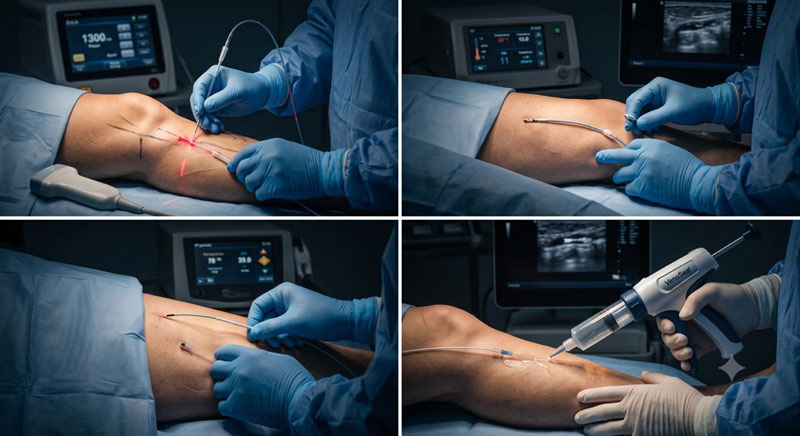
Once the problem vein is identified, treatment usually falls into one of these categories:
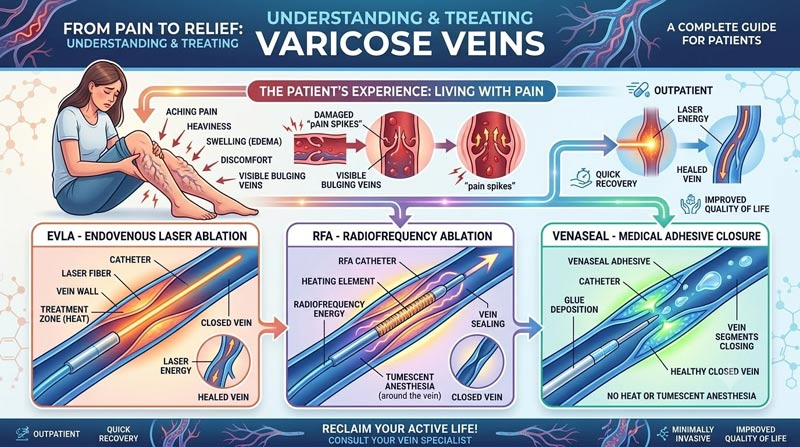
- Endovenous Laser Therapy (EVLT)
- Radiofrequency Ablation (RFA)
- Venaseal (Glue therapy), which has no needle pricks
- Ultrasound-guided vein ablation procedures
- Sclerotherapy, for select cases
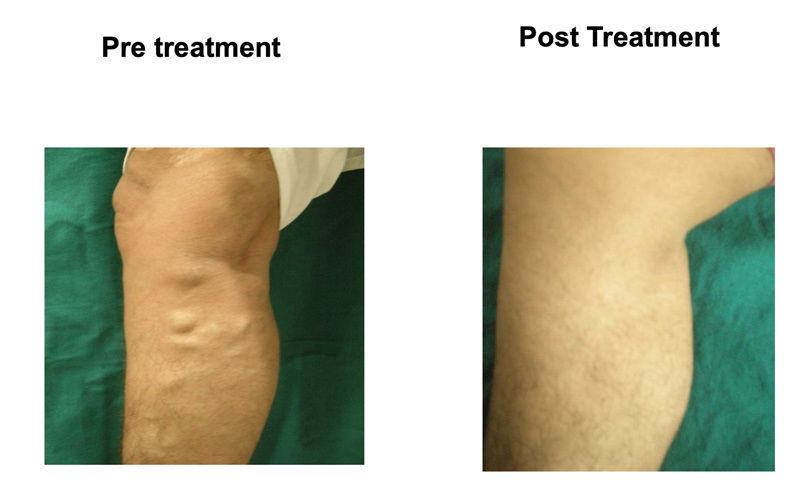
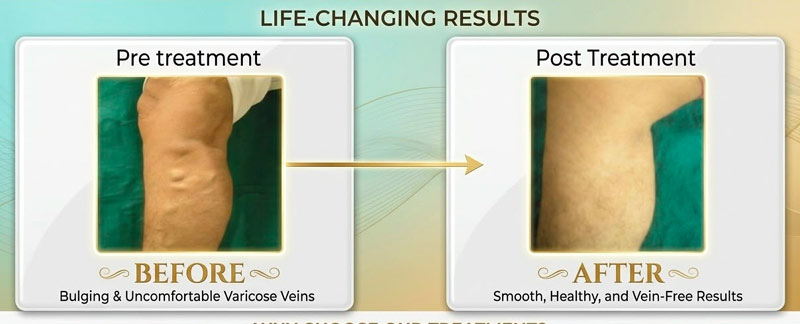
The vein isn't removed — it's sealed shut from the inside. Blood reroutes through healthier veins nearby, and the treated one shrinks and gets absorbed by the body over the following weeks.
It's all done under local anaesthesia. Most patients are home the same day.
Step 3: Recovery Happens Faster Than People Expect
This is usually the part that surprises patients most. Walking is encouraged almost immediately, and most people are back to their normal routine within a few days. Less pain than surgery, barely any scarring, and a fraction of the downtime.
Traditional Surgery vs Modern Non-Surgical Treatment
|
Feature |
Traditional Surgery |
Non-Surgical Treatment |
|
Incisions |
Larger cuts |
Tiny puncture |
|
Hospital Stay |
Usually longer |
Same-day discharge |
|
Recovery |
Several weeks |
Much faster |
|
Pain |
More discomfort |
Minimal discomfort |
|
Scarring |
Possible |
Minimal |
|
Return to Daily Life |
Slower |
Quicker |
Who Actually Needs This?
If you're dealing with persistent leg pain, bulging veins, heaviness, recurring swelling, discoloration, ulcers, bleeding, or chronic venous insufficiency, non-surgical treatment is generally worth exploring. But not every case is the same — what works for one person's veins might not be right for another's. That's why a proper evaluation and Doppler scan come before any decision, not after.
Why Patients Keep Coming Back to us ?
Who you choose to treat you matters more than people realize going in.
Our approach is built around getting the diagnosis right first, then shaping the treatment plan around the individual — not applying the same protocol to everyone who walks through the door. Every patient gets proper vein mapping and a recommendation based on what their own scans show.
What patients tend to mention afterward: a thorough initial assessment, access to advanced minimally invasive procedures, a plan that actually fit them, modern imaging rather than guesswork, an emphasis on long-term results, and follow-up care that doesn't just stop after the procedure.
What's Changed in Vein Treatment Lately?
Vein treatment looks pretty different than it did a decade ago. Laser ablation and radiofrequency ablation have become the standard choice for most cases now, mainly because they work well and get people back on their feet much faster than older surgical methods ever did.
The practical effect of that shift: fewer people delaying treatment out of fear of a hospital stay or weeks stuck at home recovering.
Habits That Actually Help Your Veins
Treatment aside, a few everyday habits go a long way:
- Stay active — a daily walk counts
- Don't sit still for hours at a stretch
- Keep your weight in check
- Elevate your legs when you can
- Wear compression stockings if your doctor suggests them
- Take breaks if your job keeps you on your feet all day
- Drink enough water, eat reasonably well
- Actually show up to your follow-up appointments
None of it's complicated. It just has to be consistent.
When It's Time to See Someone?
Don't wait for symptoms to start dictating your day. See a vascular specialist if you notice leg pain that isn't easing up, swelling that won't go down, bleeding from a vein, skin ulcers, darkening skin around the ankles, or sudden redness, warmth, or tenderness in the leg.
Catching it early almost always means a simpler path forward.
Frequently Asked Questions
Is non-surgical varicose vein treatment painful?
It's done under local anaesthesia or sometimes under a nerve block. Relatively painless procedure which is done with maximum patient comfort.
How long does the treatment take?
Somewhere between 30 & 60 minutes, depending on how many veins are involved.
Can I walk after the procedure?
Yes — walking is actually encouraged soon after. It helps circulation and speeds up recovery.
Will the treated veins come back?
Once a vein is sealed shut, it stays that way. New varicose veins can still rarely form elsewhere over time, though, which is why lifestyle and follow-ups still matter.
Is this suitable for everyone?
Depends on the individual case. A Doppler ultrasound and a proper consultation are what actually determine the right approach — not a blanket answer.
Can Dr. Arjunlokesh treat conditions other than varicose veins?
Yes. Besides varicose vein care, Dr. Arjun Lokesh is also among the Best Doctors For Fibroid Treatment In Chennai and provides Thyroid Nodule Treatment Chennai using advanced minimally invasive techniques whenever appropriate.
How Much Does Varicose Vein Laser/RFA Treatment Cost in Chennai?
Treatment cost depends on the number of veins treated, whether one or both legs are involved, and the technique used. Glue closure is usually the costliest, RFA is moderately priced & Laser ablation is generally the most cost-effective. Most health insurance plans in India cover varicose vein ablation treatment.
Final Thoughts
You don't have to live with varicose veins, and you definitely don't have to assume surgery is your only way out. Varicose Veins Treatment Without Surgery Chennai offers a safer, quicker route to real relief.
If you're considering Varicose Veins Treatment In Chennai, a consultation with Dr. Arjun Lokesh is a reasonable place to start. He'll help you understand what's actually going on and what treatment fits your case — not a generic one. With early diagnosis and the right care, healthier legs are closer than most people assume.
Last Medically reviewed: 22.07.2026 - Dr. Arjunlokesh Netaji
- NICE Clinical Guideline CG168 — Varicose veins in the legs: diagnosis and management. https://www.nice.org.uk/guidance/cg168
- De Maeseneer MG et al. European Society for Vascular Surgery (ESVS) 2022 Clinical Practice Guidelines on the Management of Chronic Venous Disease of the Lower Limbs. European Journal of Vascular and Endovascular Surgery, 2022.
- Gloviczki P et al. Society for Vascular Surgery / American Venous Forum / American Vein and Lymphatic Society Clinical Practice Guidelines for the Management of Varicose Veins of the Lower Extremities, Part I. Journal of Vascular Surgery: Venous and Lymphatic Disorders, 2023.
- Lurie F et al. CEAP classification system and reporting standard, revision 2020. Journal of Vascular Surgery: Venous and Lymphatic Disorders.
- O'Flynn N, Vaughan M, Kelley K. Diagnosis and management of varicose veins in the legs: NICE guideline. British Journal of General Practice, 2014. https://pmc.ncbi.nlm.nih.gov/articles/PMC4032011