
How Does a Thyroid Specialist in Chennai Diagnose and Treat Thyroid Nodules?
Written & medically reviewed by Dr. Arjunlokesh Netaji, MD, DM (Interventional Radiology), EBIR, Consultant Neuro & Vascular Interventional Radiologist, Chennai.
You had a neck ultrasound for something else entirely. At the bottom of the report there's one extra line: “Right lobe nodule, 3.5 cm, TI-RADS 3.” Nothing hurts, and you feel fine, yet you can't stop rereading that line.
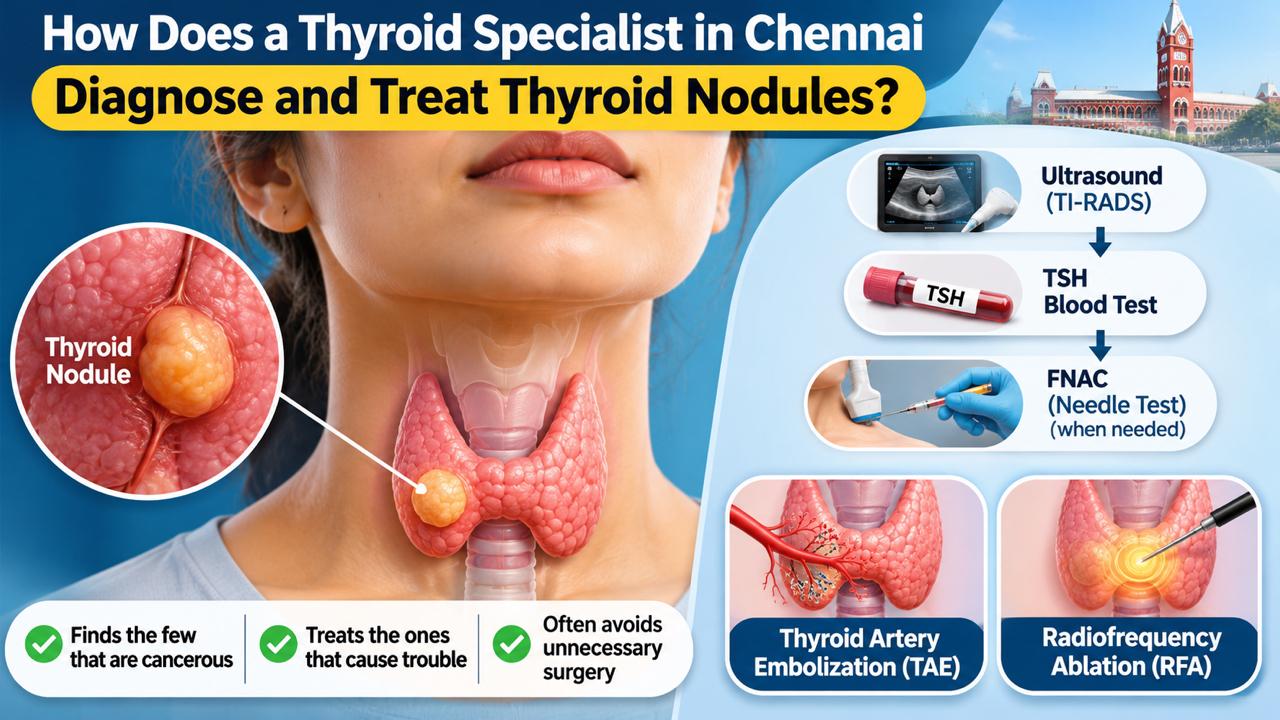
Thyroid nodules are among the most common findings on a neck scan, and most of them are harmless. A thyroid specialist has two jobs: find the few that aren't, and treat the ones that cause trouble without sending everyone else for surgery they don't need.
Here's how that works, step by step.
|
Key takeaways:
|
What Is a Thyroid Nodule?
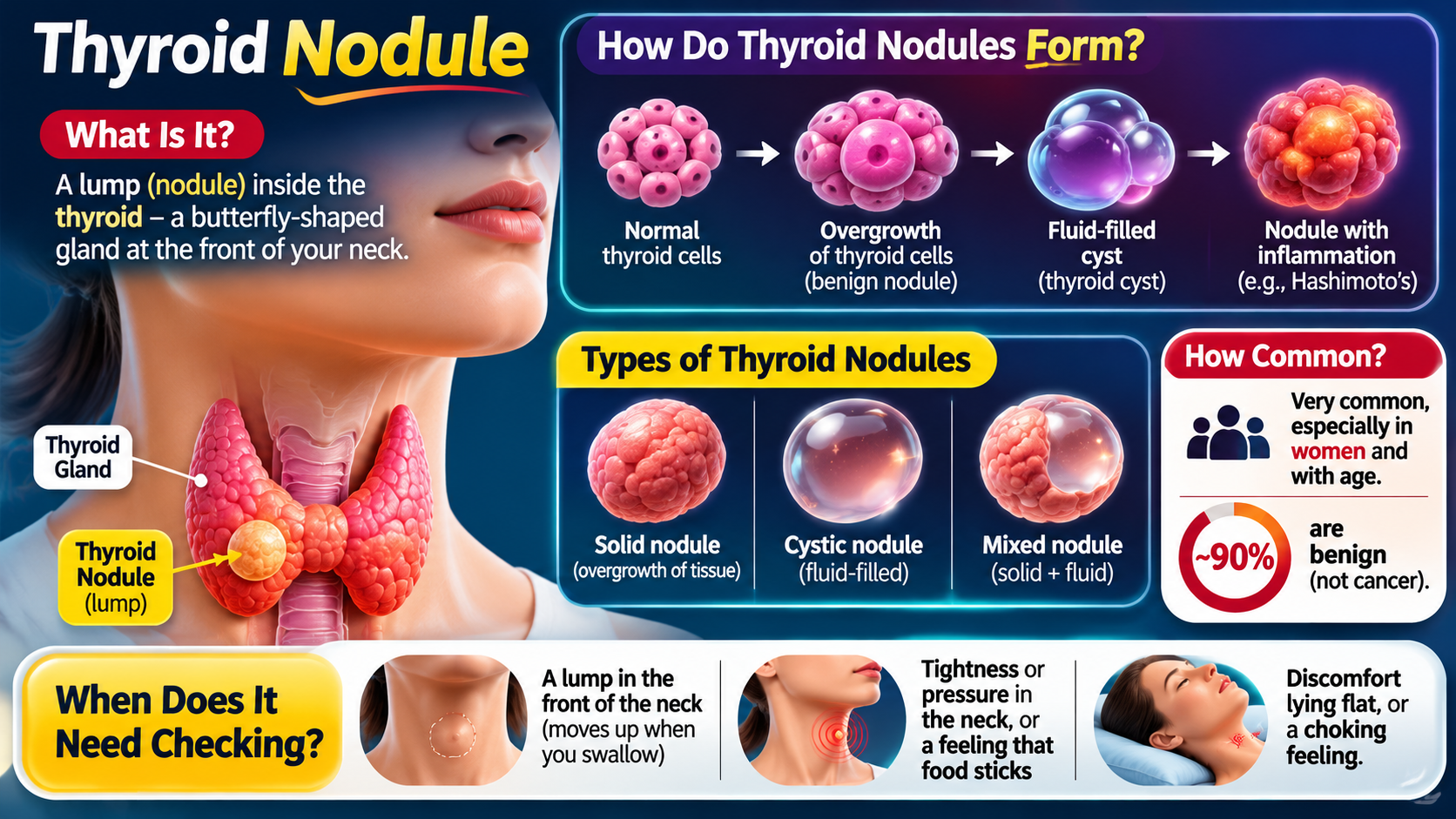
A thyroid nodule is a lump inside the thyroid, the butterfly-shaped gland at the front of your neck. It can be solid, filled with fluid (a cyst), or a mix of both.
Nodules are very common. Ultrasound finds them in a large share of adults, more often in women and more often with age, but only a few are big enough to feel. Most are an overgrowth of normal thyroid tissue (colloid or adenomatous nodules) or simple cysts. Some come with Hashimoto's thyroiditis. Only a small minority are cancer.
When Does a Thyroid Nodule Need Checking?
Most nodules cause no symptoms at all and turn up by chance on a scan. When they do cause symptoms, you may notice:
- A lump in the front of the neck that moves up when you swallow
- Tightness or pressure in the neck, or a feeling that food sticks
- Discomfort lying flat, or a choking feeling
- A racing heart, shaky hands, or weight loss, which can mean the nodule is making extra hormone (a “hot” nodule)
See a doctor sooner if:
- The lump feels hard or fixed, or is growing quickly
- Your voice has been hoarse for more than a few weeks
- The glands (lymph nodes) in your neck are swollen
- You had radiation to the head or neck in childhood
- A close relative has had thyroid cancer
Go to a hospital straight away if your neck swells suddenly and painfully (this can be bleeding into a nodule), or breathing or swallowing becomes hard.
Who Treats Thyroid Nodules in Chennai?
Thyroid nodule care is a team effort:
Interventional Radiologist: performs the thyroid ultrasound, takes the FNAC needle sample, and treats suitable benign nodules with image-guided ablation or embolization, without surgery.
Endocrinologist: manages thyroid hormone problems, such as an underactive or overactive gland.
Pathologist: examines the cells from the needle test under the microscope.
Thyroid surgeon: removes cancerous nodules.
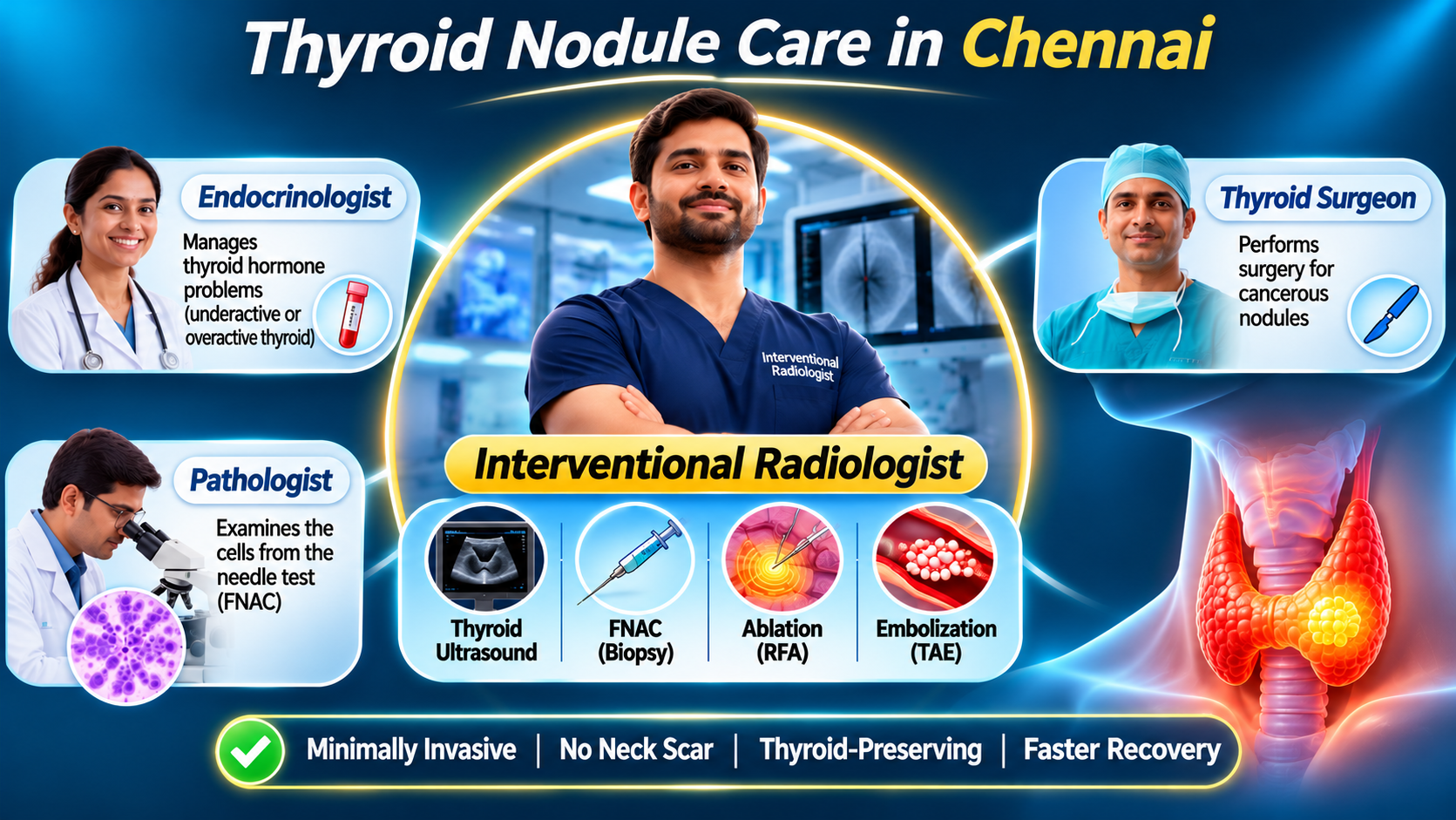
An interventional radiologist's work is image-guided. The same doctor who sees the nodule on ultrasound can sample it and, if it is benign and causing symptoms, treat it with a needle. Here's more on how a thyroid specialist in Chennai handles lumps and swellings.
Step-by-Step: How Thyroid Nodules Are Diagnosed
Step 1: Conversation and neck examination
The visit starts with questions: when the lump was noticed, whether it's growing, any voice or swallowing changes, past radiation, and family history. Then you take a sip of water and swallow while the doctor feels your neck. The thyroid rises with each swallow, which makes the nodule and any swollen lymph nodes easier to judge.
Step 2: TSH blood test
TSH comes first because the result changes the path you take.
- Low TSH: the nodule may be making extra hormone. A thyroid uptake scan (scintigraphy) is usually next. “Hot” nodules are very rarely cancerous and usually don't need a needle test.
- Normal or high TSH: the ultrasound decides what happens next.
Step 3: High-resolution ultrasound with TI-RADS scoring
Ultrasound is the key test for any thyroid nodule. The doctor looks at five features: what the nodule is made of (solid or cystic), how dark it looks (echogenicity), its shape (a “taller-than-wide” shape is a warning sign), its edges, and any tiny bright spots (microcalcifications). Each feature earns points, and the total gives a TI-RADS level from TR1 to TR5. The lymph nodes in the neck are checked during the same scan.
Together, the TI-RADS level and the nodule's size decide whether you need a needle test, a repeat scan later, or nothing further:
|
TI-RADS level |
What it means |
FNAC usually advised if |
Follow-up scan if |
|
TR1 |
Benign |
Not needed |
Not needed |
|
TR2 |
Not suspicious |
Not needed |
Not needed |
|
TR3 |
Mildly suspicious |
2.5 cm or larger |
1.5 cm or larger |
|
TR4 |
Moderately suspicious |
1.5 cm or larger |
1.0 cm or larger |
|
TR5 |
Highly suspicious |
1.0 cm or larger |
0.5 cm or larger |
Thresholds are based on the American College of Radiology (ACR) TI-RADS. Your doctor may adjust them for your history, for example, after childhood radiation or if neck lymph nodes look abnormal.
Step 4: Ultrasound-guided FNAC
FNAC (fine needle aspiration cytology) takes a small sample of cells from the nodule. Because the needle is guided by ultrasound, the doctor can see its tip inside the nodule the whole time, which makes the sample more reliable than one taken by feel alone.
- You lie on your back with a pillow under your shoulders.
- A local anaesthetic may be used. The needle is fine, similar to the one used for a blood test.
- Two or three quick passes are made. The whole procedure takes around 10 to 15 minutes.
- You go home the same day. Mild soreness for a day is common.
If you take blood thinners (aspirin, clopidogrel, warfarin, apixaban or similar), tell the doctor beforehand. Don't stop them on your own; any change should be agreed with the doctor who prescribed them.
Step 5: Understanding your FNAC report (the Bethesda system)
FNAC results are reported in six Bethesda categories:
|
Bethesda category |
What usually happens next |
|
I – Nondiagnostic |
Not enough cells. FNAC is repeated under ultrasound, usually after a short gap. |
|
II – Benign |
Not cancer. Ultrasound follow-up, plus treatment if the nodule causes symptoms. |
|
III – Atypia of undetermined significance |
Unclear. A repeat FNAC or molecular testing, depending on overall risk. |
|
IV – Follicular neoplasm |
Cells can't confirm or rule out cancer. Molecular testing or removal of one lobe (lobectomy). |
|
V – Suspicious for malignancy |
Referral to a thyroid surgeon. |
|
VI – Malignant |
Cancer confirmed. Treatment is planned with the thyroid surgical team. |
What Does a “TI-RADS 4” Nodule Mean?
Back to that report. A TR4 nodule has some features that need a closer look, so it is called “moderately suspicious”. At 1.6 cm, it is above the 1.5 cm threshold, so an FNAC is usually advised.
Moderately suspicious doesn't mean cancer. Most TR4 nodules still turn out to be benign. The FNAC is how you find out, so please don't wait months worrying, and don't panic either.
How Are Thyroid Nodules Treated?
Treatment depends on five things: the FNAC result, the nodule's size, your symptoms, your thyroid hormone levels, and what you prefer. Many people need no treatment at all.
1. Watchful monitoring
This suits benign nodules that are small and cause no symptoms. A repeat ultrasound is usually done after 12 to 24 months, and the gap gets longer if the nodule stays stable. If it grows significantly (by about 20% in two dimensions, or by more than 50% in volume), it is evaluated again.
2. Radiofrequency ablation (RFA): treatment without surgery
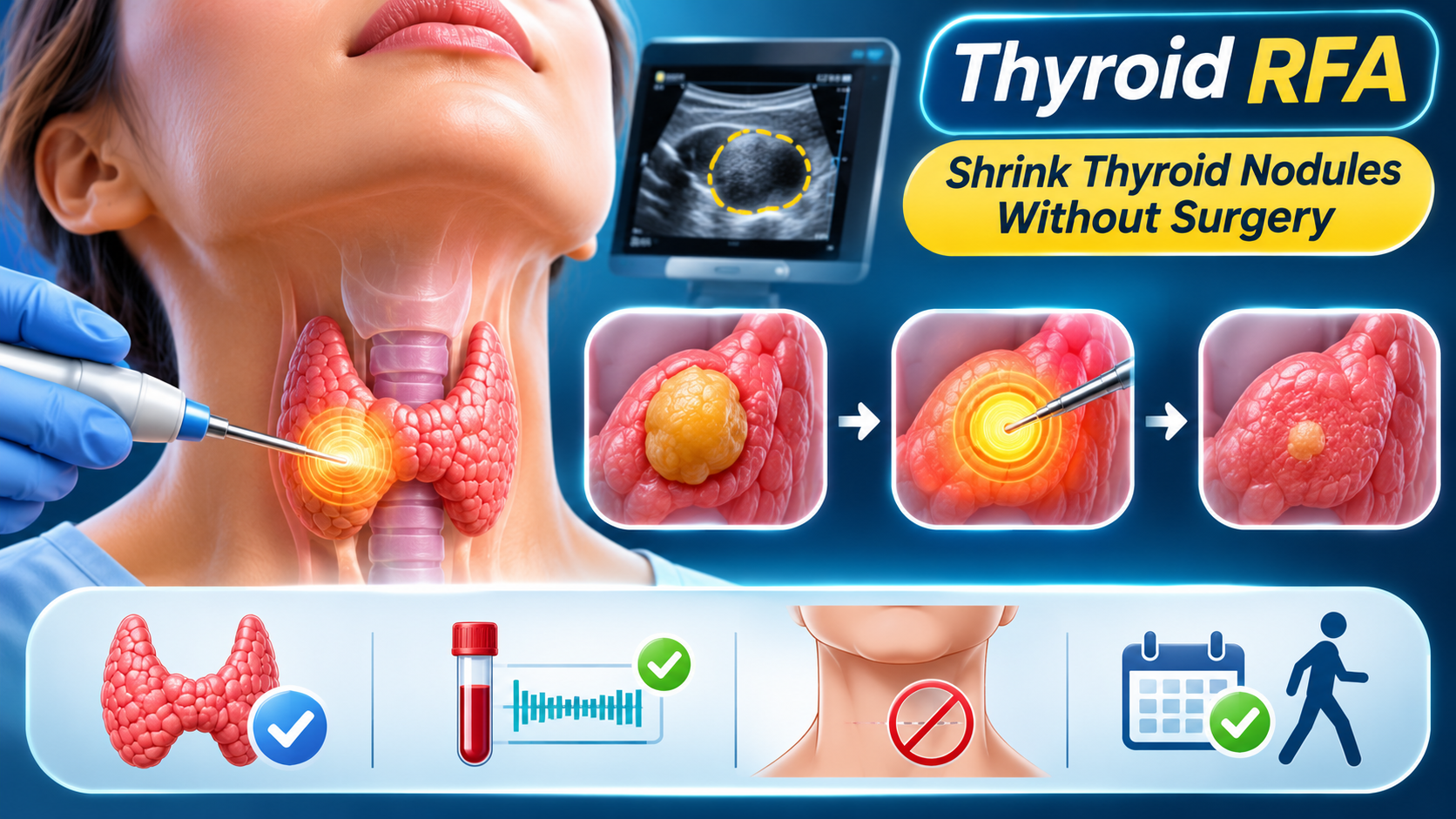
RFA shrinks a benign nodule from the inside. It is the main non-surgical option an interventional radiologist offers.
Who it's for: people whose nodule is confirmed benign (usually two benign FNACs, or one benign FNAC with clearly benign ultrasound features) and who have:
- Neck pressure, discomfort, or difficulty swallowing
- A lump that shows and bothers them
- An overactive “hot” nodule, in selected cases
How it's done: Under local anaesthesia and continuous ultrasound guidance, a thin electrode is placed inside the nodule. It heats the tissue section by section (the “moving-shot” technique) while the doctor watches on the screen. The procedure usually takes 45 minutes.
What to expect afterwards:
- Your body gradually absorbs the treated tissue, so the nodule shrinks over the following months. A volume reduction of about 50 to 80% within a year is typical.
- The rest of the thyroid is left alone, so hormone levels usually stay normal and most people don't need lifelong tablets.
- There is no neck scar, and most people are back to their routine the next day.
- Some large nodules need a second session.
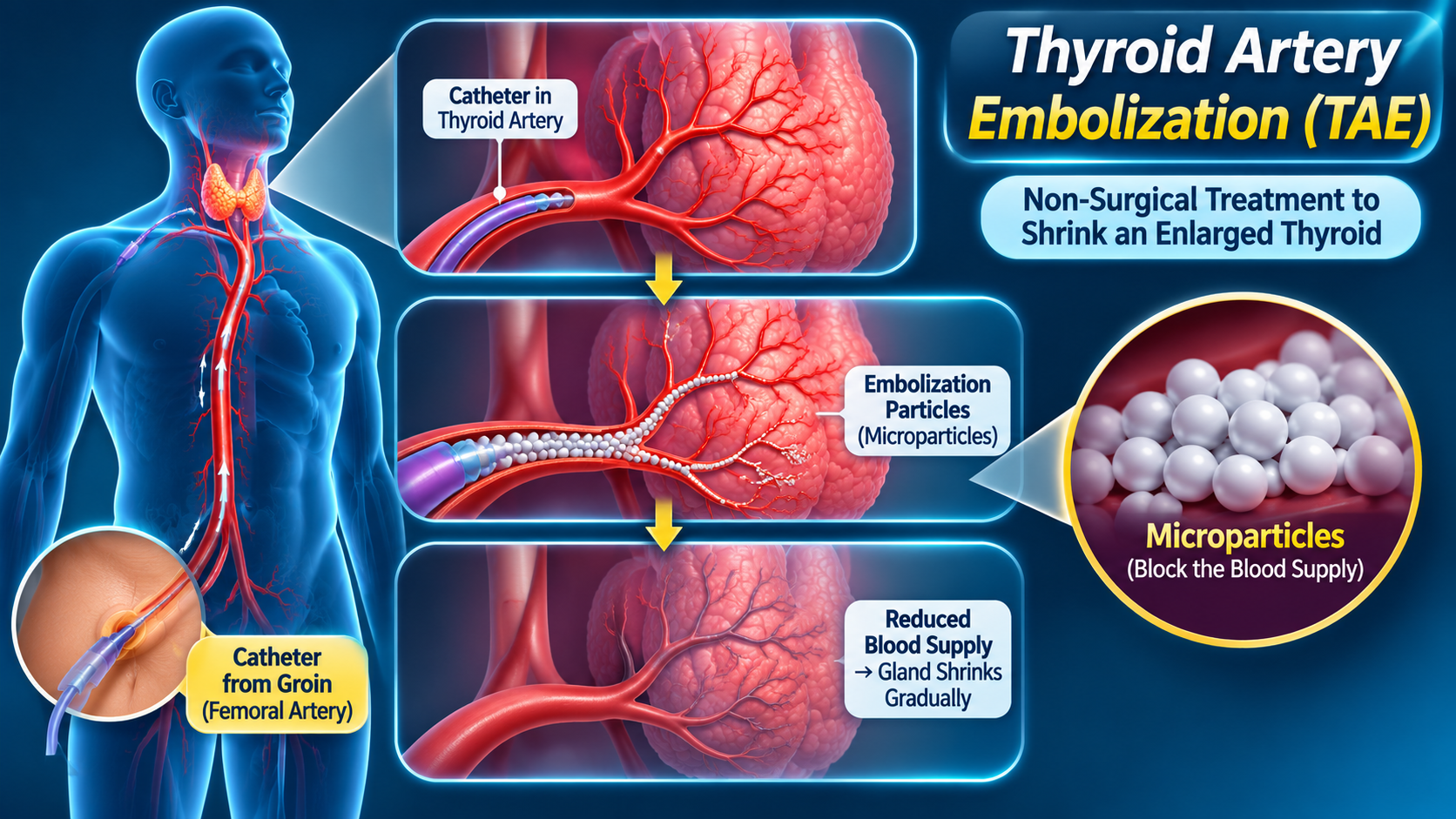
3. Thyroid artery embolization (TAE): non-surgical reduction of gland volume
TAE shrinks an enlarged gland by blocking the arterial blood supply that feeds it. Performed via a tiny puncture in the wrist or groin, it leaves no scar on the neck. It serves as a modern non-surgical alternative offered to selected individuals.
Who it's for: patients presenting with:
- A bulky goitre or multiple benign nodules causing pressure or difficulty swallowing
- An overactive thyroid (such as Graves' disease) when oral medications, radioiodine, or surgery are unsuitable
- A massive or highly vascular goitre scheduled for surgery, to minimize blood loss during the operation
Any nodular lesions must first be confirmed as benign through an FNAC test.
While RFA targets isolated nodules, TAE addresses diffuse enlargement by treating the entire gland.
How it's done: under local anaesthesia, a slender catheter is navigated from the wrist or femoral artery directly to the thyroid arteries. Guided by real-time fluoroscopic angiography, the specialist delivers microparticles to restrict arterial blood supply to the target region. The procedure typically takes 1 to 2 hours, requiring a brief hospital stay of one to two days.
What to expect afterwards:
- Devascularized gland tissue progressively regresses over subsequent months.
- Mild neck discomfort is common over the first few days and responds well to medication.
- Transient spikes in hormone levels can occur early on.
- For hyperthyroidism, hormone output generally normalizes over several weeks to months, though some individuals may require continued tablets or supplementary care.
- No visible incision or neck scar remains.
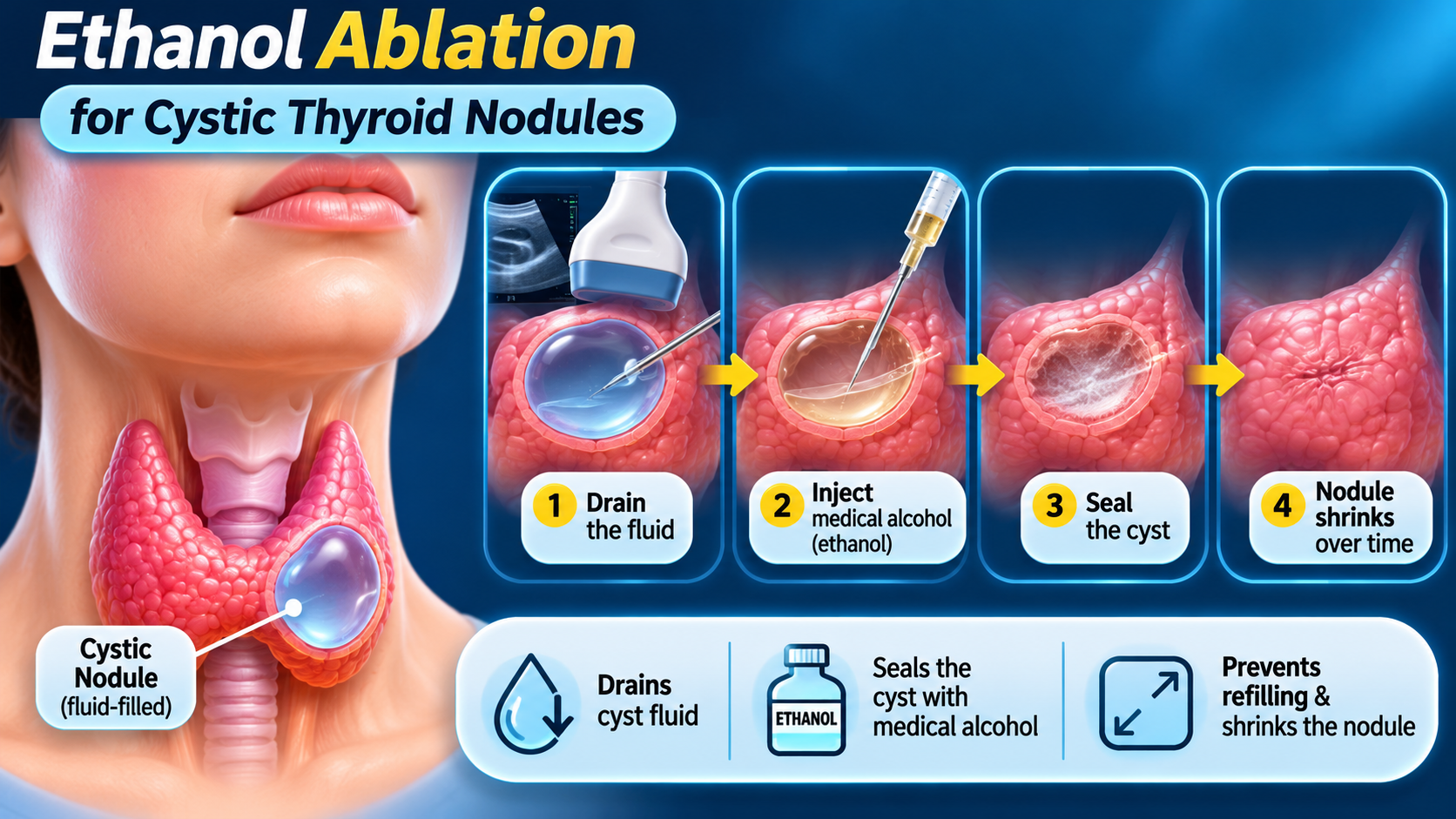
4. Ethanol ablation for cystic nodules
A nodule that is mostly fluid can keep refilling after it is drained. With ethanol ablation, the fluid is drained under ultrasound, and a small amount of medical alcohol is injected to seal the cyst. It is often the first choice for predominantly cystic nodules.
5. Radioactive iodine
For overactive (“hot”) nodules, a radioactive iodine capsule can switch off the overactive tissue. It is an alternative to RFA or surgery. It isn't used in pregnancy or while breastfeeding, and some people develop an underactive thyroid over time.
6. Surgery
Surgery is advised for nodules that are suspicious or cancerous (Bethesda V or VI), for some indeterminate results, and for very large goitres, including those that extend into the chest. The surgeon removes either one lobe (lobectomy) or the whole gland (total thyroidectomy). After total thyroidectomy, thyroid tablets are needed for life.
Treatment options at a glance
|
Option |
Best suited for |
Anaesthesia |
Neck scar |
Thyroid function |
|
Monitoring |
Small benign nodules without symptoms |
None |
No |
Unchanged |
|
RFA ablation |
Benign nodules causing symptoms; selected hot nodules |
Local |
No |
Usually preserved |
|
Thyroid artery embolization |
Multiple or large benign nodules causing symptoms; multinodular goitre |
Local |
No |
Usually preserved |
|
Ethanol ablation |
Mostly cystic nodules |
Local |
No |
Preserved |
|
Radioactive iodine |
Hot (overactive) nodules |
None (oral) |
No |
May become underactive |
|
Surgery |
Suspicious or cancerous nodules; very large goitres |
General |
Yes |
Tablets needed after total removal |
Thyroid Nodules in Women and During Pregnancy
Thyroid nodules are more common in women. If a nodule is found during pregnancy, ultrasound is completely safe, and an FNAC can be done safely if one is needed. Radioactive iodine scans and treatment are avoided during pregnancy and breastfeeding. Planned (non-urgent) ablation is usually deferred until after delivery. Tell your doctor early if you're pregnant or planning a pregnancy.
How to Prepare for Your Appointment
Previous ultrasound reports and, if possible, the images or CD, so the nodule's size can be compared over time
- A recent TSH result, if you have one
- Any earlier FNAC reports
- A list of your medicines and supplements, especially blood thinners
- Your questions, written down
Frequently Asked Questions
Are thyroid nodules common?
Yes. Ultrasound finds them in many adults, especially women and older people. Most are small and harmless.
Can a thyroid nodule be cancer?
A small minority are. About 9 in 10 are benign. An ultrasound with TI-RADS scoring and, when needed, an FNAC tell the two apart.
Do all thyroid nodules need an FNAC?
No. Whether you need one depends on the nodule's TI-RADS level and size. Many low-risk or small nodules only need a repeat scan.
Is FNAC of the thyroid painful?
Most people feel only mild discomfort, similar to a blood test. It takes about 10 to 15 minutes, and you go home the same day.
Can a thyroid nodule be treated without surgery?
Yes, if it is confirmed benign. Radiofrequency ablation, ethanol ablation, and thyroid artery embolization can shrink suitable nodules without a cut or a scar. Suspicious or cancerous nodules still need surgery.
Will RFA or embolization affect my thyroid hormone levels?
Usually not. RFA treats only the nodule and leaves the rest of the gland working, so most people don't need thyroid tablets afterwards.
Do thyroid nodules go away on their own?
Fluid-filled nodules sometimes shrink on their own. Solid nodules usually stay the same or grow slowly, which is why follow-up scans matter.
Which doctor should I see for a thyroid nodule in Chennai?
See an endocrinologist for hormone problems. For a lump, look for a doctor who performs thyroid ultrasound and FNAC and offers non-surgical treatment, such as an interventional radiologist. A surgeon joins if the nodule is suspicious or cancerous.
Get Your Thyroid Nodule Checked
A thyroid nodule on a report is a reason to get answers, not a reason to panic. With an ultrasound, a needle test when needed, and a clear plan, most people find out their nodule is harmless, and those who need treatment have more options than surgery alone.
At Kauvery Hospital, Vadapalani, you can book a consultation with Dr. Arjunlokesh Netaji for thyroid nodule ultrasound, ultrasound-guided FNAC, radiofrequency ablation, or thyroid artery embolization for suitable benign nodules. Bring your earlier reports and scans so the visit can pick up where you left off.
Last medically reviewed: 24/11/2026 – Dr. Arjunlokesh Netaji