
Best Interventional Radiologist in Chennai: What Endovascular Specialists Can Treat Without Surgery
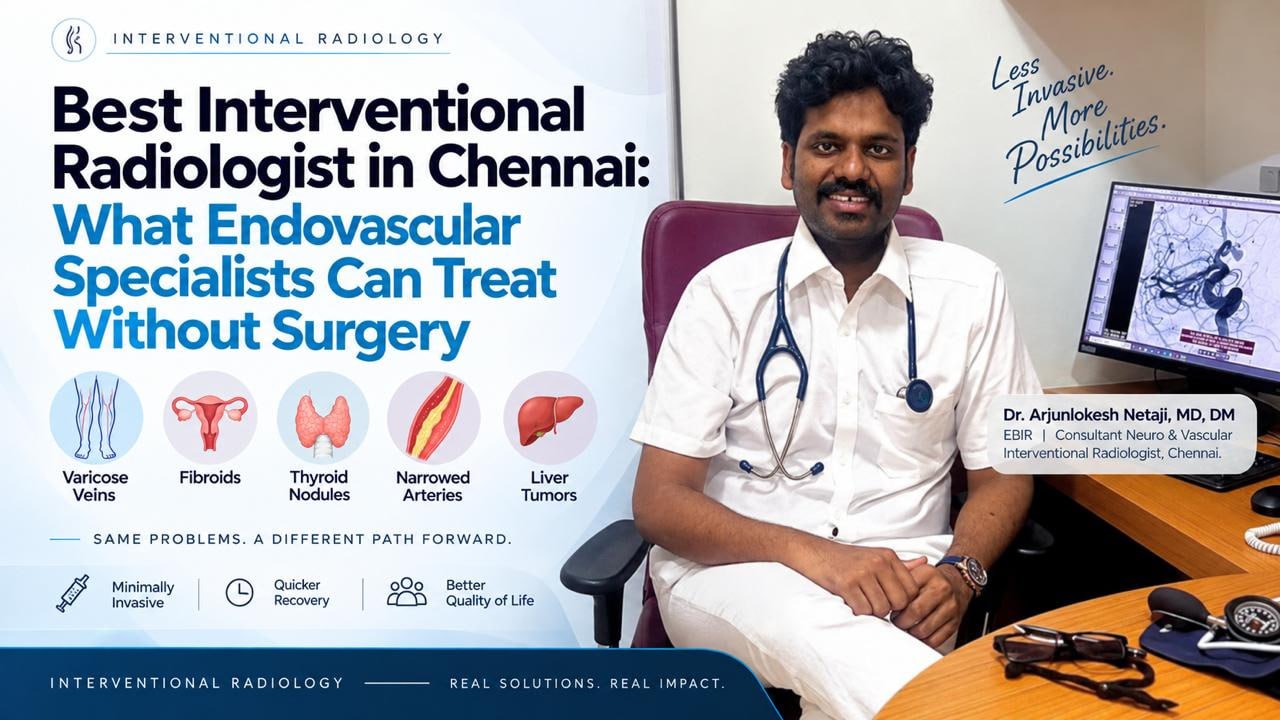
Written & Medically reviewed by Dr. Arjunlokesh Netaji, MD, DM (Interventional Radiology), EBIR — Consultant Neuro & Vascular Interventional Radiologist, Chennai.
A surgeon's operating table isn't the only place vascular and structural problems get treated anymore.
Interventional radiology has quietly changed the conversation for several common diagnoses — varicose veins, fibroids, thyroid nodules, narrowed arteries. These are now treated through a needle puncture instead of an incision, for patients whose scans support it.
It doesn't replace surgery. It gives more patients a second, less invasive door into treatment.
This piece is for anyone researching the best interventional radiologist in Chennai and trying to understand what the field covers, how these procedures unfold, and where the real limits are.
What an Interventional Radiologist Actually Does ?
Think of it as image-guided medicine. Instead of opening the body to reach a problem directly, an interventional radiologist uses live imaging as a map, then threads a catheter or needle through a small access point to get there.
What this looks like in practice:
- Live scan as the guide — ultrasound, X-ray, or CT shows exactly where to go
- No large cut — usually just a small puncture in the wrist, groin or the skin over the problem area.
- Local anesthesia in most procedures — you stay awake but comfortable. General anesthesia is rarely needed.
- A broader scope than most people expect — covering blocked or narrowed arteries, liver tumors, kidney-related vascular problems, select chronic joint pain, and the two conditions patients ask about most: uterine fibroids and thyroid nodules
Dr. Arjunlokesh Netaji, trained at JIPMER and AIIMS, practices as an endovascular specialist in Chennai across these areas. Much of the actual work happens before any procedure begins — reading the imaging studies carefully enough to know whether a patient is genuinely a fit, or whether surgery remains the more honest recommendation.
What Happens During a Procedure ?
Every procedure has its own protocol, but most follow a similar sequence:
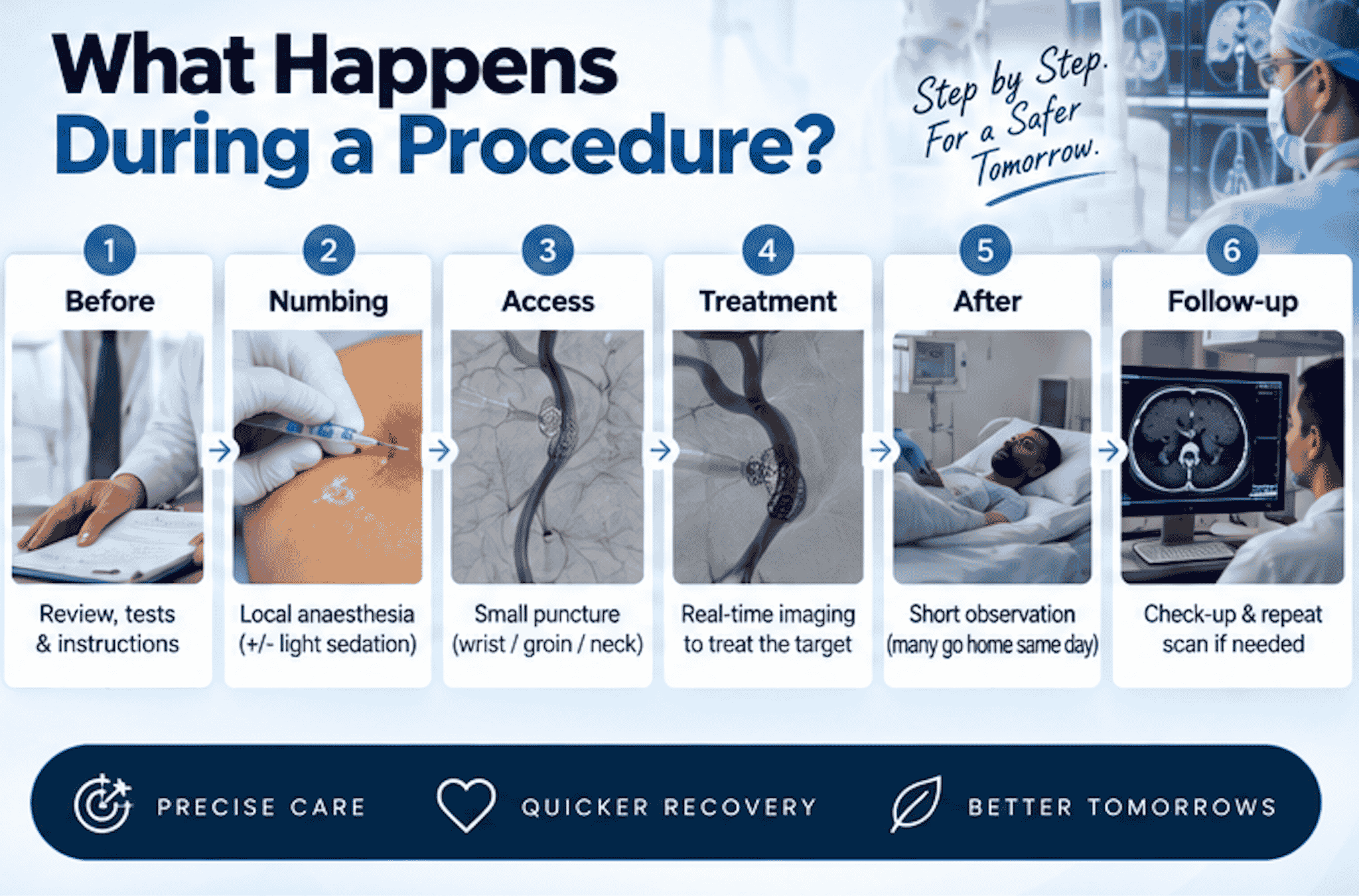
1. Before: your doctor reviews your symptoms, reports and scans, orders blood tests, and tells you about fasting and medicines such as blood thinners.
2. Numbing: local anaesthetic is given at the puncture site, sometimes with light sedation to help you relax.
3. Access: a needle or catheter enters through a small puncture — usually in the wrist, groin, or directly over the target, such as the neck for a thyroid nodule.
4. Treatment: guided by live scans, the doctor treats the target — sealing a vein, blocking blood supply to a fibroid, opening a narrowed artery or shrinking a nodule — while protecting nearby tissue.
5. After: a short rest and observation. Many patients go home the same day; some procedures need an overnight or longer stay.
6. Follow-up: a check-up and often a repeat scan, from a few days to a few months later, to confirm the treatment worked.
Which Conditions Can Be Treated Without Surgery ?
Varicose Veins
Stripping surgery used to be the default. It still has its place, but for a large share of patients, non-surgical treatment for varicose veins in Chennai now means radiofrequency or laser ablation instead.
- Closes the problem vein from the inside
- Done under local anesthesia
- Usually a same-day visit, no stripping involved
Patients considering this route can speak with a Best Varicose Vein Doctor In Chennai about whether their case is a fit.
Uterine Fibroids
Heavy bleeding, pelvic pressure, pain — fibroids tend to show up in fairly recognizable ways.
Uterine fibroid embolization takes a different approach than removal:
- Cuts off the blood supply feeding the fibroid
- Lets it shrink gradually rather than removing it surgically
- Often worth discussing for women who want to preserve their uterus
The right fit still depends on the fibroid's size, its location, and what the patient wants for her reproductive future. More detail is available on Uterine Fibroid Treatment Without Surgery.
Thyroid Nodules
A nodule on ultrasound doesn't automatically mean the operating room.
Thermal ablation becomes a reasonable option once:
- Biopsy results confirm the nodule is benign
- The nodule is genuinely causing symptoms — visible swelling or discomfort
A Thyroid Specialist In Chennai can walk through whether that applies here.
Peripheral Artery Disease (Leg Artery Blockage)
A buildup of plaque inside the leg vessels restricts circulation. This pattern is frequently encountered among patients with diabetes, hypertension, or a history of smoking. Typical indicators include exertional calf cramping that subsides with rest, coldness in the lower extremities, non-healing foot ulcers, and skin discoloration in the toes.
- Angioplasty and stenting — a tiny balloon inflates the constricted vessel, followed by placing a delicate metallic scaffold to maintain patency.
- Limb preservation — re-establishing adequate arterial perfusion promotes tissue healing and mitigates amputation risks, particularly vital in diabetic care.
- Comprehensive management required — endovascular opening must be paired with strict glycemic control, smoking cessation, walking regimens, and medical therapy.
Selected Knee Pain
Genicular artery embolization (GAE) is one of the newer additions to this field.
-
Used in a subset of patients with knee osteoarthritis pain
-
Works by reducing blood flow to the small abnormal vessels tied to joint inflammation
-
Not a solution for every kind of knee pain — patient selection and imaging matter more here than elsewhere on this list.
Liver Tumors and Oncology Interventions
- Transarterial chemoembolization (TACE) — administers chemotherapy straight into the vessel supplying the hepatic lesion before occluding that artery.
- Radioembolization (TARE) — delivers microscopic radioactive spheres directly to the targeted tumor growth through its vascular network.
- Thermal ablation — employs a specialized needle applicator to eradicate localized lesions using heat energy.
These options are mapped out in tandem with your surgical team, medical oncologist, and hepatologist. Depending on the clinical picture, they can serve as standalone therapies, operate alongside conventional surgery, or help bridge the gap for patients awaiting transplantation.
Stroke and Brain Blood Vessel Problems
- Mechanical thrombectomy (clot removal): a catheter is guided into the blocked brain artery and the clot is pulled out. It works best when done as early as possible; in selected patients, it can still help up to 24 hours after symptoms begin, depending on brain scan findings.
- Brain aneurysm coiling or flow diverter: a weak, ballooning spot in a brain artery is treated from inside — soft platinum coils fill the bulge, or a fine mesh stent redirects blood flow away from it — without opening the skull.
- Other procedures: carotid artery stenting for narrowed neck arteries, embolisation of abnormal brain blood vessel tangles (AVMs), and venous sinus stenting for selected patients with raised brain pressure (IIH) causing headaches and vision problems.
Most brain procedures are done under general anaesthesia and need a hospital stay.
Here's a quick summary of what's covered above:
At a Glance: Conditions and Their Minimally Invasive Options
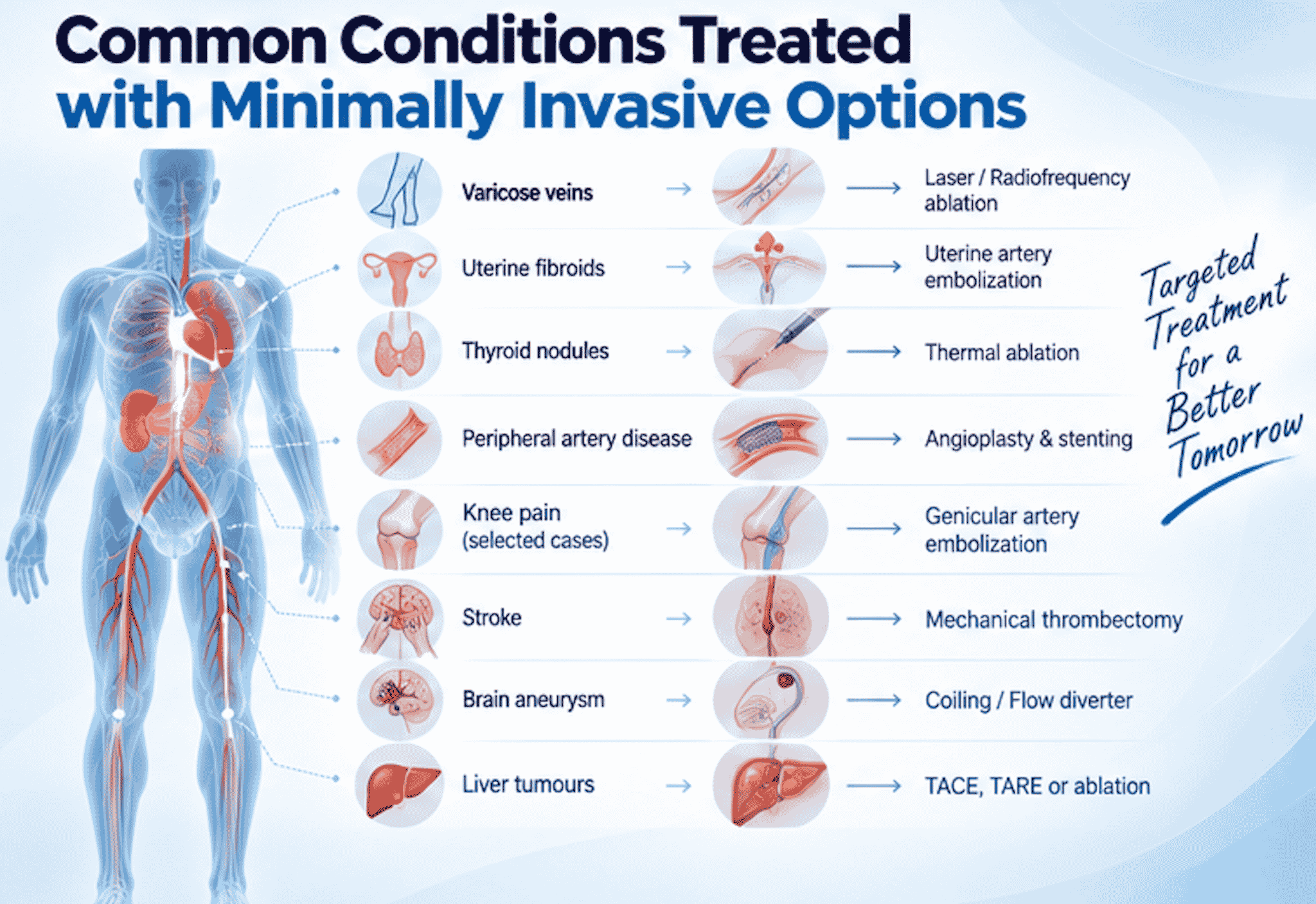
|
Condition |
Minimally Invasive Option |
How It Works |
|
Varicose veins |
Radiofrequency or laser ablation |
Closes the affected vein using controlled heat |
|
Uterine fibroids |
Uterine fibroid embolization |
Reduces blood supply to targeted fibroids |
|
Thyroid nodules |
Thermal ablation |
Reduces the size of selected benign nodules |
|
Peripheral artery disease |
Angioplasty and stenting |
Improves blood flow through narrowed arteries |
|
Selected chronic knee pain |
Genicular artery embolization |
Targets abnormal vessels associated with inflammation |
|
Stroke |
Mechanical thrombectomy |
Removes the clot to restore blood flow to the brain |
|
Brain aneurysm |
Coiling or flow diverter |
Seals off the weak bulge from inside the artery |
|
Liver tumours |
TACE, TARE or ablation |
Targets the tumour directly through its blood supply or with heat |
Treat this table as a starting reference, not a prescription. What actually applies to any one patient depends on their own imaging and history.
Why Patients choose Non-Surgical Options ?
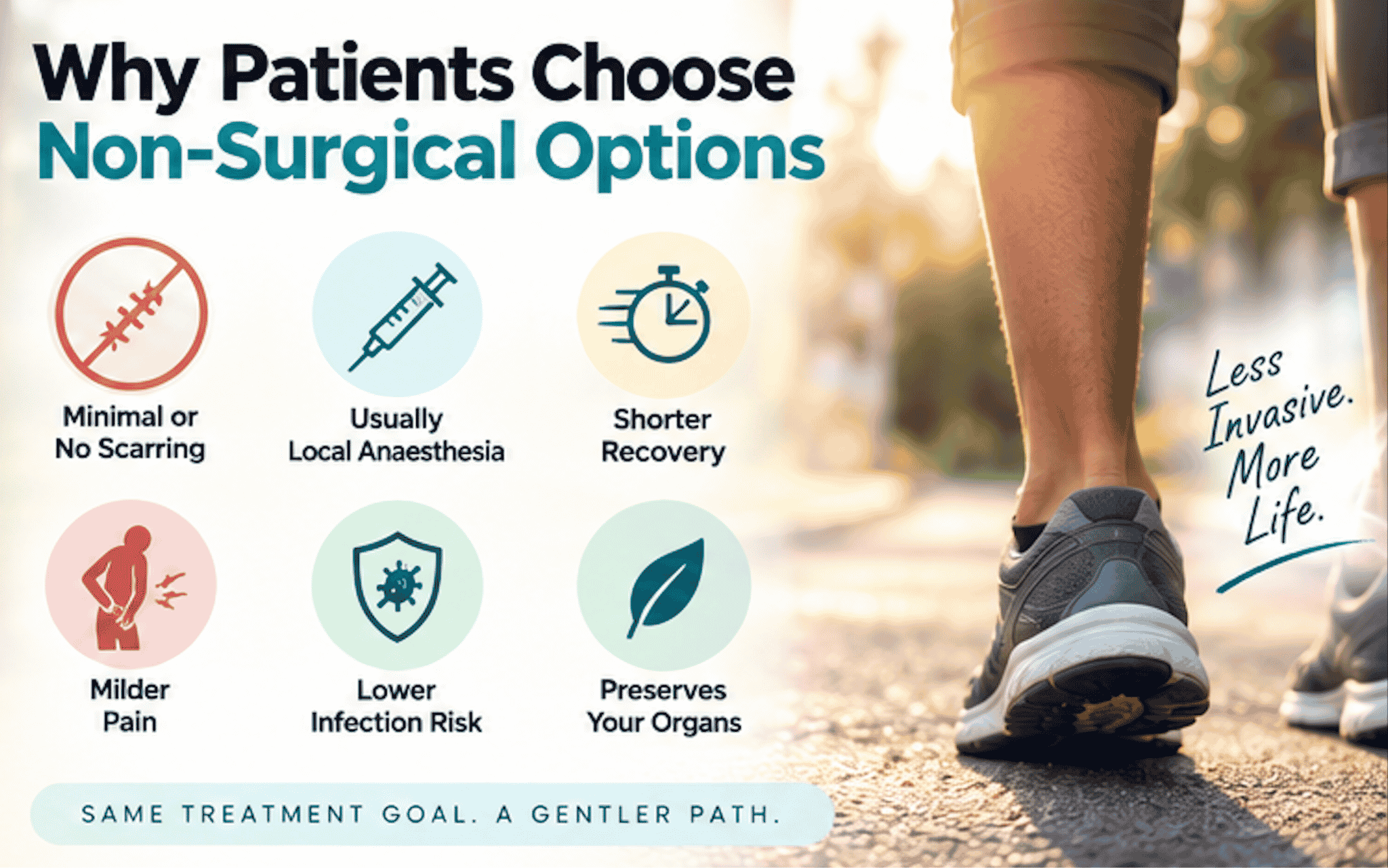
- Minimal to no visible scarring — entering through a tiny access point rather than an incision
- Local anesthesia in most procedures — bypassing the general anesthetic risks of open surgery
- Milder pain post-procedure and shorter hospital stays
- Shorter recovery windows to get back to routine life
- Lower infection risk compared with conventional operative sites
- Organ preservation — keeping structures like the thyroid or uterus intact.
These benefits are often why patients research this route before consulting a surgeon. None of this is a guarantee — outcomes still depend on the individual and the condition being treated. But for eligible patients, these are the practical reasons this conversation comes up in the first place.
What to Expect at Consultation and During Recovery
A proper evaluation starts with the basics:
- Symptoms and medical history
- Imaging appropriate to the condition — ultrasound, CT, or MRI
- A decision on whether a minimally invasive route is realistic, or whether surgery is still the sounder path
Recovery specifics vary by procedure, but the general pattern holds:
- Local anesthesia or light sedation
- Same-day discharge in most cases
- A short stretch avoiding strenuous activity
- A follow-up scan to confirm the treatment worked
Anyone considering one of these procedures should get a specific recovery timeline from their doctor rather than assume a generic one applies.
Choosing the Right Endovascular Specialist
A few practical checkpoints can clarify whether a practitioner offers sound, reliable care for your condition:
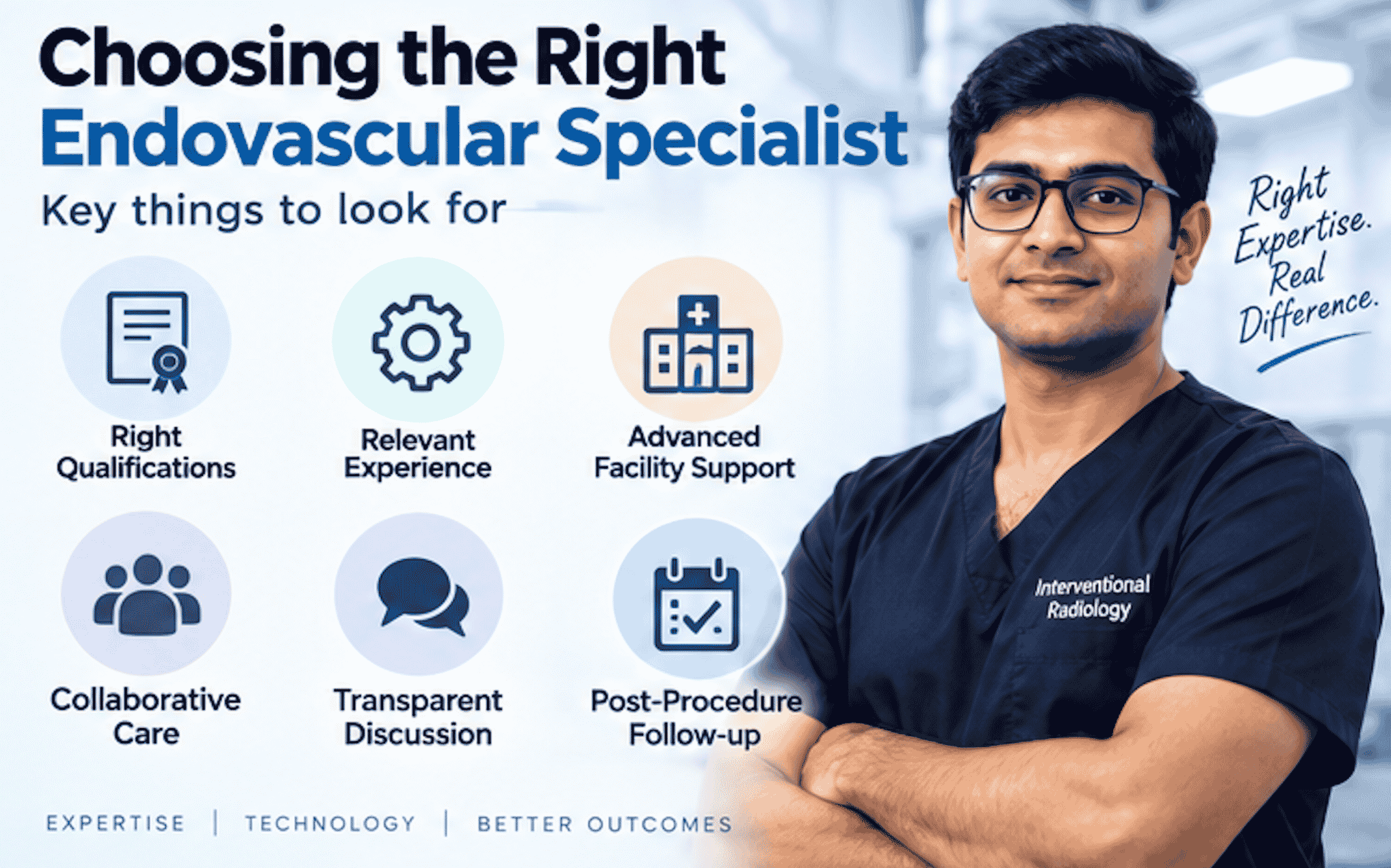
- Formal subspecialty credentials — advanced qualification such as DM or DrNB (Interventional Radiology) , alongside qualifications like EBIR.
- Routine experience with your intervention — performing that specific technique as standard clinical practice.
- Proper facility support — an advanced cath lab equipped with immediate critical care and surgical contingency.
- Collaborative clinical approach — active coordination alongside your primary specialist, oncologist, or attending surgeon.
- Transparent discussion of choices — clear outlines covering potential risks & surgical alternatives.
- Structured post-procedure monitoring — a defined schedule for long-term evaluation and imaging checks.
Frequently Asked Questions
1. Is Interventional radiology painful?
Most procedures use local anesthesia or mild sedation, so there's little discomfort. Some soreness at the puncture site afterward is normal and resolves quickly.
2. How is an Interventional radiologist different from a surgeon?
An Interventional radiologist reaches the target through a small puncture guided by live imaging, while a surgeon needs a larger incision. The diagnosis decides which one treats you.
3. What is the difference between endovascular treatment and open surgery?
Endovascular treatment uses a small puncture with imaging guidance; open surgery uses a larger incision. The right choice depends on the condition and its severity.
4. Are minimally invasive procedures suitable for everyone?
No. Eligibility depends on the diagnosis, imaging findings, and general health. Some patients are still better served by traditional surgery.
5. Is uterine fibroid embolization as effective as surgery?
For many patients — especially those wanting to preserve their uterus — it works well. Fit depends on the fibroid's size, number, and location.
6. Are thyroid nodules always treated surgically?
No. Benign nodules causing symptoms can sometimes be managed with ablation instead, once biopsy rules out cancer.
7. How do I know if I'm a candidate for a non-surgical treatment?
Only a clinical evaluation with imaging can confirm this. It shows which options genuinely apply to your specific case.
Not Sure If Surgery Is Your Only Option?
A minimally invasive approach may fit your case — or surgery may genuinely be the better path. The only way to know is a clear, honest evaluation, backed by your own scans rather than a general assumption.
Book a consultation with Dr. Arjunlokesh Netaji in Chennai — every case is reviewed in detail, and what you get back will be based on your specific imaging and history, not a generic answer.
Last Medically reviewed:(22/09/2026) -Dr. Arjunlokesh Netaji