
Varicose Veins vs Leg Pain Due to Other Causes: How to Tell the Difference
Written & Medically reviewed by Dr. Arjunlokesh Netaji, MD, DM (Interventional Radiology), EBIR — Consultant Neuro & Vascular Interventional Radiologist, Chennai.
Leg pain can mean many things. Sometimes it's just tired muscles after a long day. Sometimes it's something more — like varicose veins.
Many patients get confused between the two. They ask the same question: is this just normal leg pain, or could it be varicose veins?
This guide will help you understand the real difference, so you know when to relax and when to see a doctor.
Why Leg Pain Is Not Always the Same
"Leg pain" isn't a diagnosis. It's a catch-all term, and the causes span a wide range — from tired muscles to something happening deeper in your circulation:
- Muscle strain
- Nerve irritation
- Dehydration
- Vascular problems
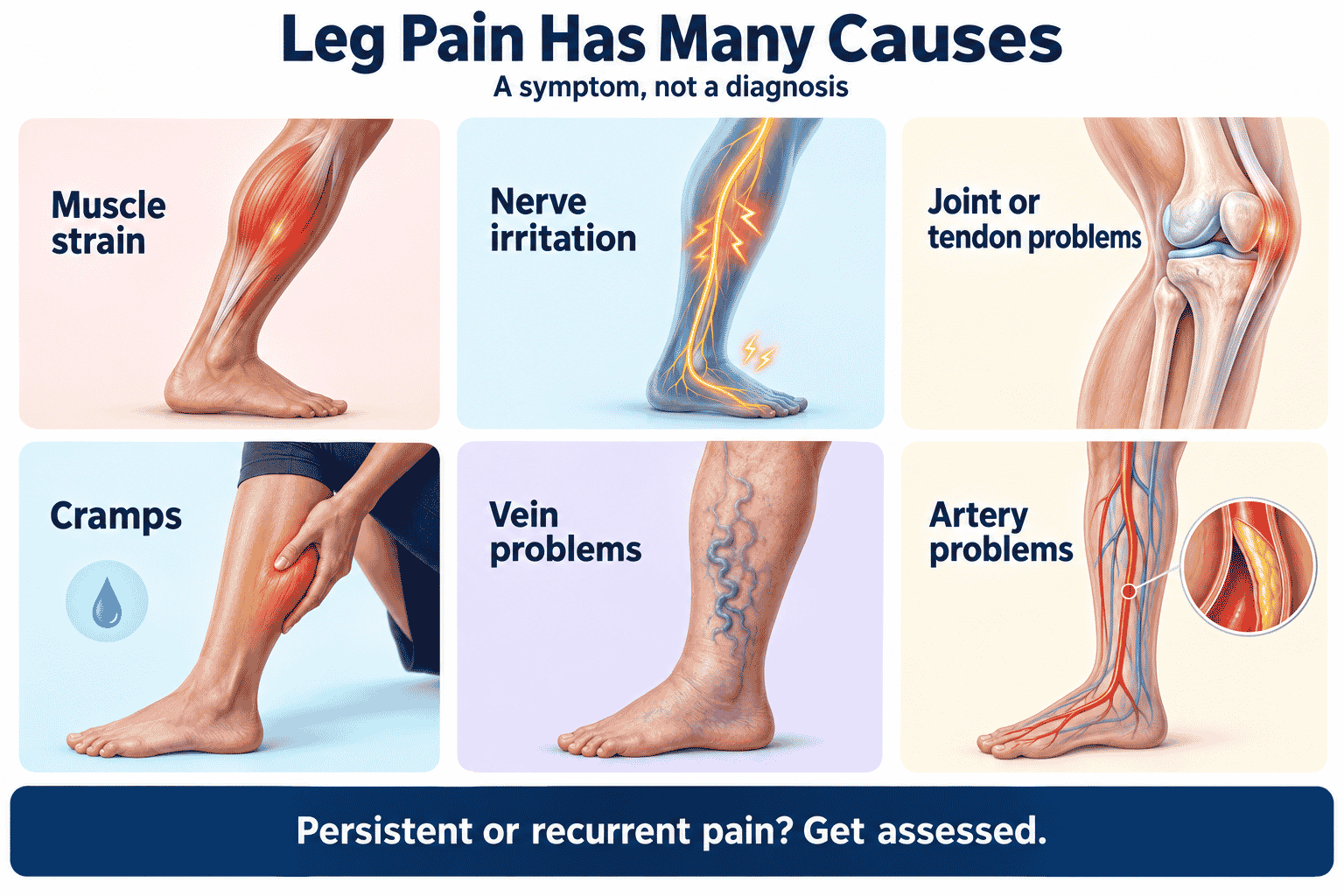
That range is exactly why patients struggle to self-diagnose.
‘Run-of-the-mill’ leg pain generally traces back to:
- Overuse — a longer walk than usual, a new workout routine, hours on your feet
- A minor injury, a cramp, or muscle fatigue after exertion
- Footwear that doesn't support your arch or heel properly
- Dehydration, which makes cramps worse and more frequent
Vein-related pain plays by different rules. It rarely announces itself with a single obvious trigger. Instead, it creeps in — legs feel a bit heavier this week than last, swelling shows up by dinnertime, and neither seems connected to anything you did that day. That slow, cumulative pattern is often the first real clue that circulation, not muscle, is the source.
What Are Varicose Veins, Really?
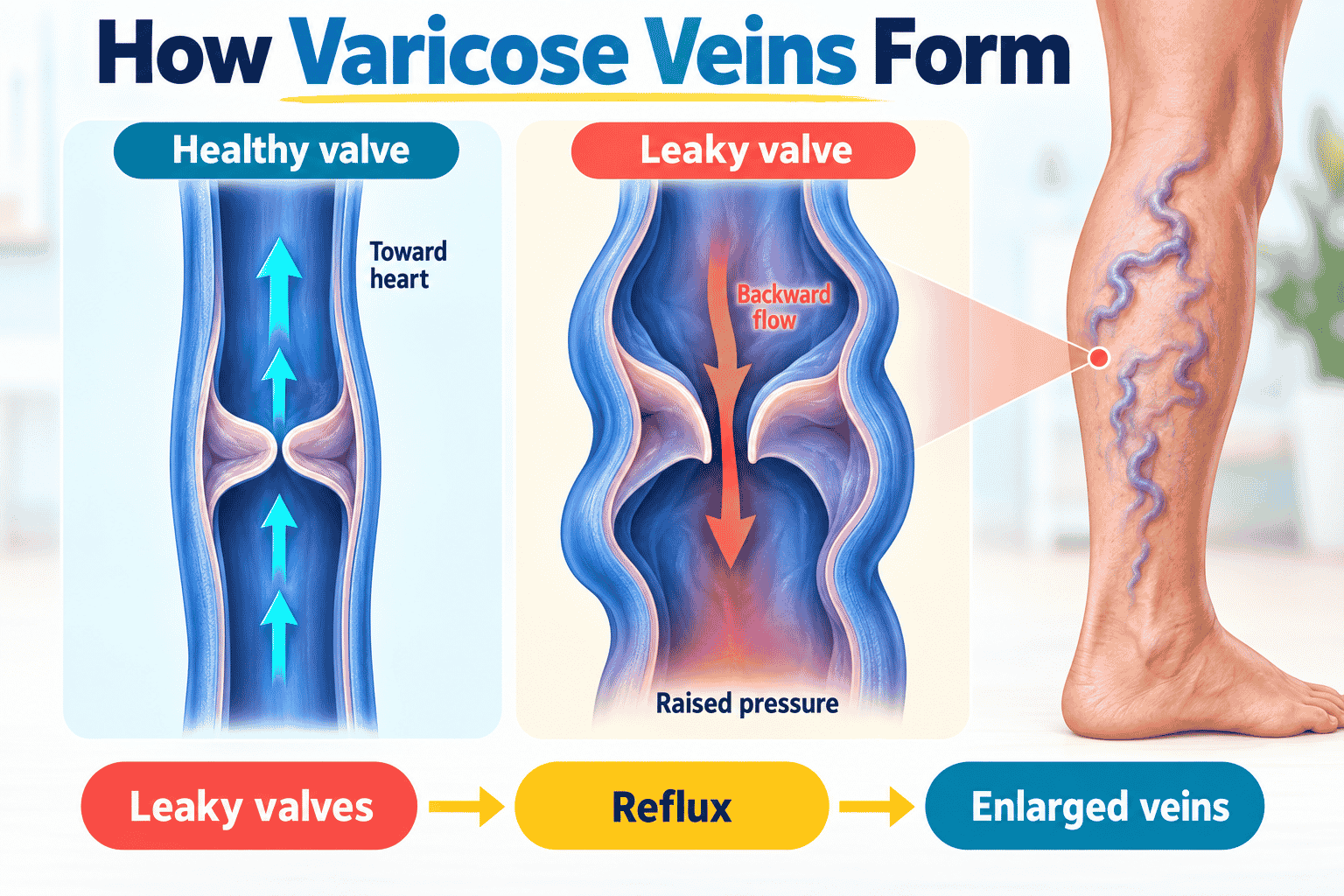
Your leg veins rely on tiny one-way valves. Their job is to keep blood moving upward, against gravity, back toward the heart.
When a valve weakens or stops sealing properly, some blood slips backward instead of continuing on. Over time it pools. The vein stretches to hold the extra volume. You end up with the bulging, rope-like veins most people picture when they hear the term.
Damaged vein valves let blood flow backward and collect in the legs instead of returning to the heart. Doctors call this chronic venous insufficiency — a clinical name for "the plumbing isn't draining properly."
What patients usually notice first:
- Bulging or twisted veins, visible through the skin
- A throbbing or aching feeling that gets worse after standing
- Cramps that show up at night, sometimes waking them up
- Itchiness around the affected vein
- Skin near the ankle that's darkened or discolored
Varicose Veins vs Ordinary Leg Pain: How to Tell
Here's a rough test you can run on yourself. Three questions:
- Does elevating your legs bring relief, and does standing for a while make things worse?
- Can you actually see a bulging or twisted vein?
- By evening, do your legs feel heavy or tired, even on a day you barely moved?
Two "yes" answers out of three is a reasonably strong signal. That's essentially how to tell if leg pain is varicose veins rather than plain fatigue.
Keep in mind — this is just a quick self-check, not a diagnosis. Only an in-person exam can confirm what's going on.
Muscle soreness behaves differently:
- Usually responds to rest and stretching within a day or two
- Rarely comes with visible vein changes
- Tends to follow a specific activity, not build up on its own
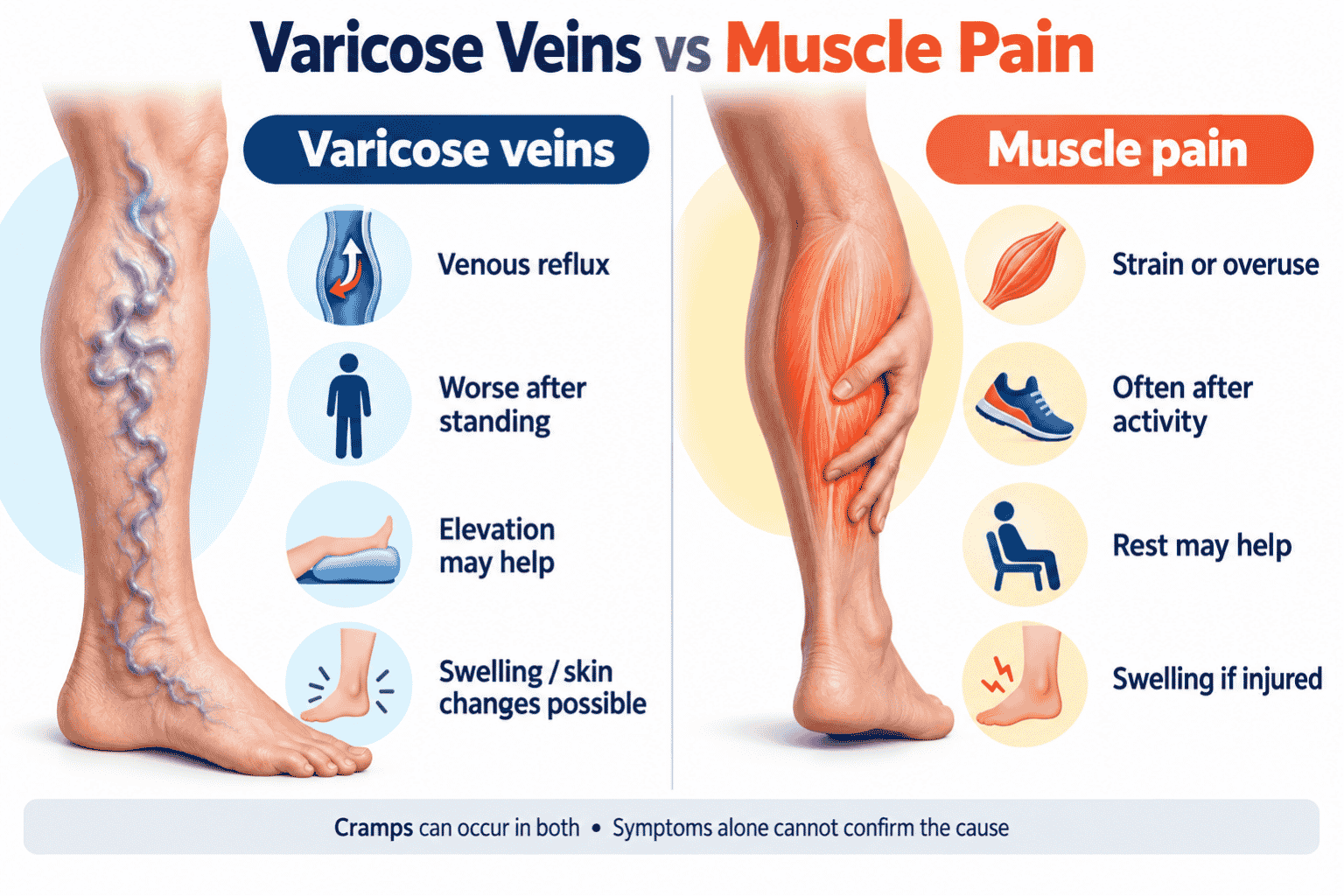
Varicose Veins vs Ordinary Leg Pain: Quick Comparison
Here's a side-by-side look at how the two usually differ:
|
Feature |
Varicose Veins |
Ordinary Leg Pain |
|
Visible veins |
Yes, bulging or twisted |
No |
|
Pain pattern |
Worse by evening, better when legs are raised |
Comes after activity, eases with rest |
|
Swelling |
Common |
Rare, unless injured |
|
Skin changes |
Discoloration, itching near ankles |
Usually none |
|
Cause |
Poor blood circulation |
Muscle strain or fatigue |
|
Night cramps |
Frequent |
Occasional |
Important: When Leg Symptoms Need Urgent Care
Most leg pain can wait a few days to be evaluated. One pattern can't.
Watch for this combination in a single leg — just one side:
- Sudden swelling
- Warmth
- Tightness or pain that comes on quickly
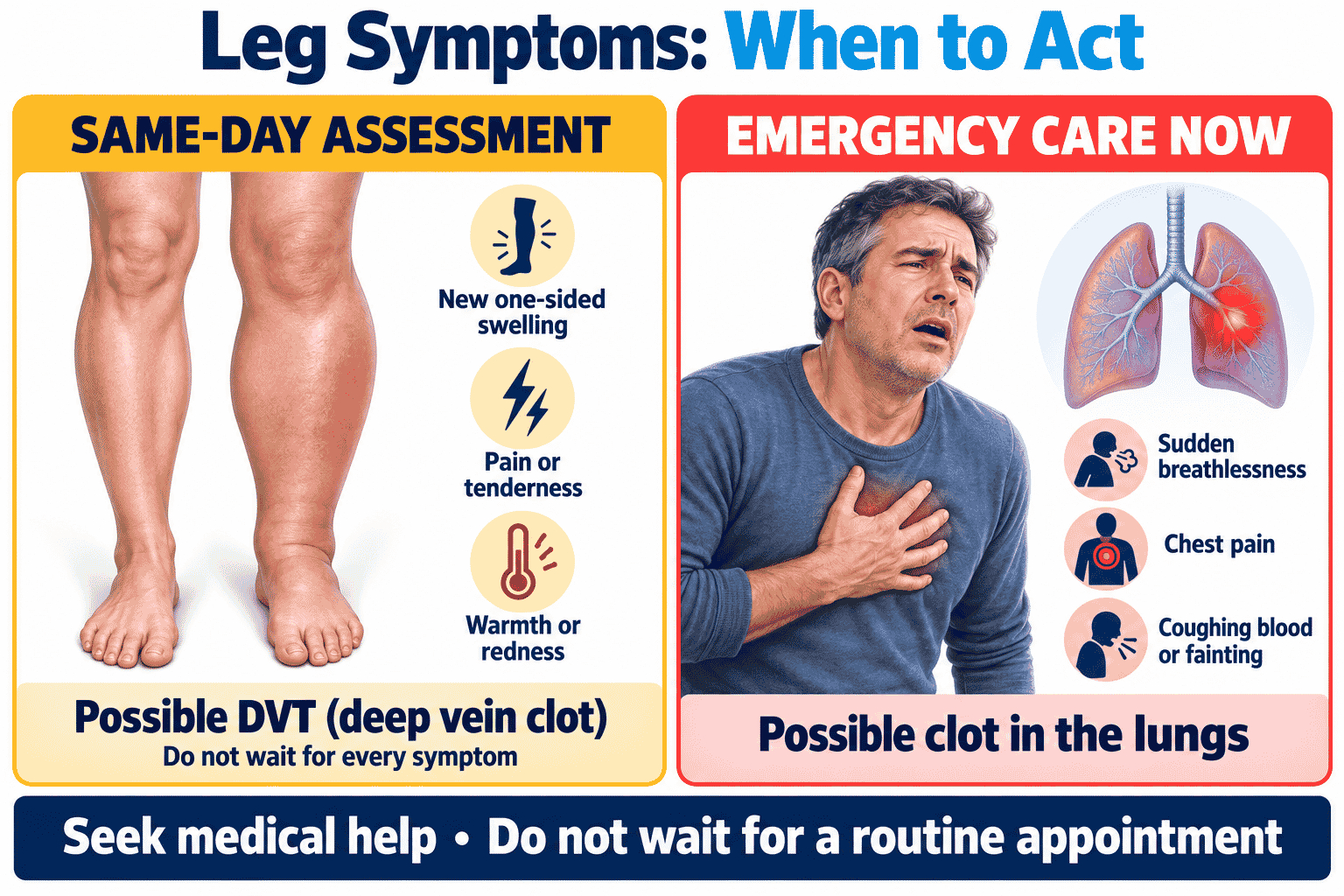
This can signal deep vein thrombosis (DVT) — a blood clot in a deep leg vein. If part of it dislodges and travels to the lungs, the result can be life-threatening.
This isn't a "monitor it for a couple of days" situation. Sudden one-sided leg symptoms need same-day medical evaluation.
Short of that emergency, it's still reasonable to book an appointment for:
- Skin that feels warm or looks reddened
- Pain that isn't improving with rest
- A varicose vein that seems to be getting bigger over time
- Swelling that keeps recurring
Vein problems caught early are almost always easier to treat. If any of this sounds familiar, it's worth getting evaluated by a Varicose Veins Specialist In Chennai.
Varicose Veins vs Spider Veins: A Quick Note
People lump these together, but they're not quite the same thing.
- Spider veins: thin, web-like lines close to the skin's surface — mostly a cosmetic concern
- Varicose veins: sit deeper, physically larger, more likely to actually hurt
That size and depth difference is the core distinction between the two.
What You Can Do Right Now
Before you get in to see anyone, a few habits can take some of the edge off:
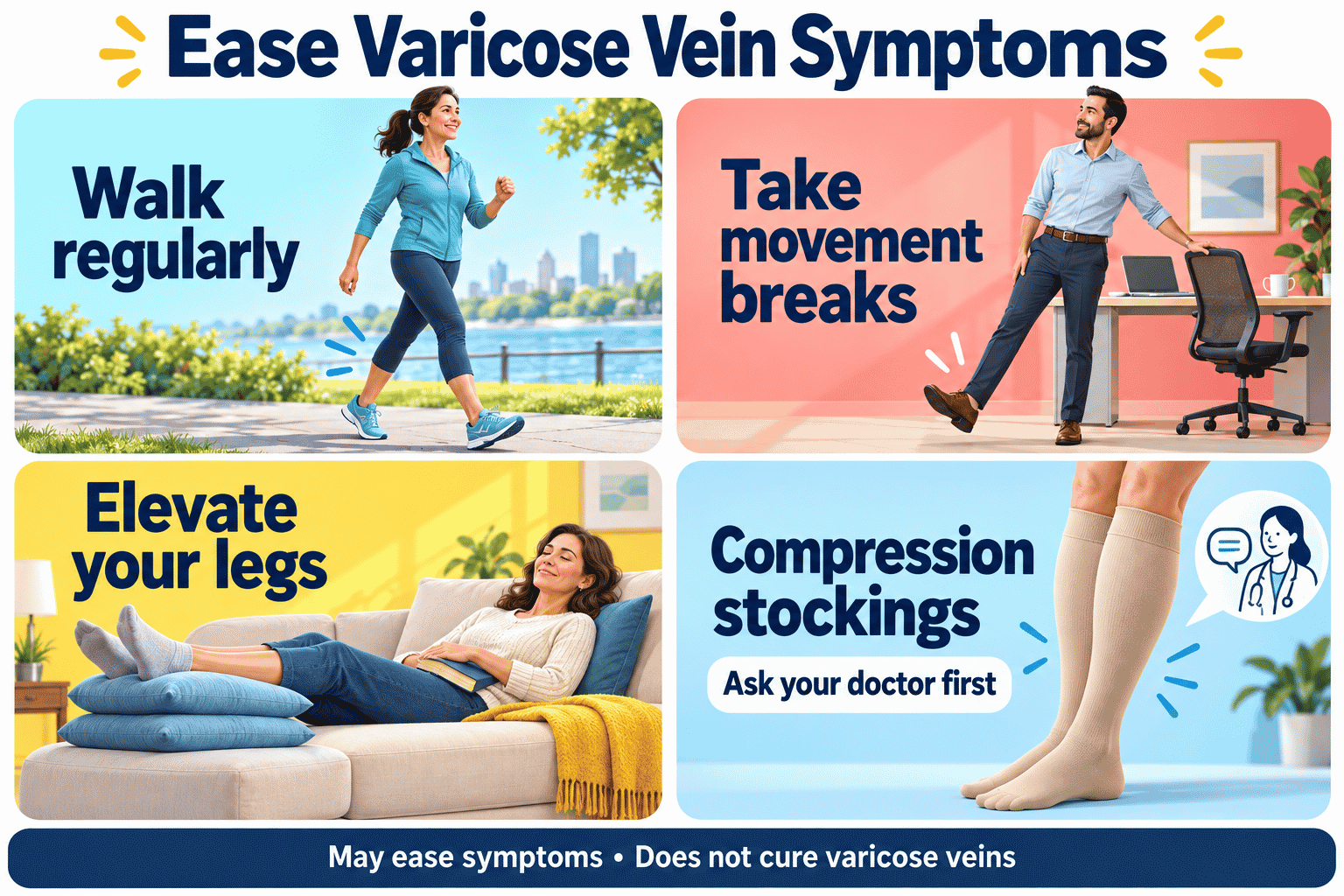
- Don't stand still in one spot for long stretches — shift your weight or walk a bit
- Elevate your legs whenever you get the chance to sit down properly
- Compression stockings help, but check with a doctor before wearing them regularly
- Keep your fluids up through the day
- If your job has you sitting for hours, get up roughly once an hour
None of this fixes varicose veins. It just makes the wait more bearable until a vein specialist looks at what's going on.
Frequently Asked Questions
1. Can varicose veins cause leg pain without visible veins?
Yes. In the earlier stages, aching or heaviness often shows up before any vein becomes visibly enlarged.
2. What does varicose vein pain feel like?
Most people describe a dull, building ache — not sharp, more like heaviness that gets worse as the day wears on.
3. Why do my legs hurt more at night?
Blood pools in the lower legs after a day of standing or sitting, so heaviness, aching, or cramps often feel worse by evening. It's common with early varicose veins, though dehydration and muscle fatigue can also cause it.
4. Can exercise or walking help with varicose veins?
Yes. Walking activates the calf muscles, which push blood back up toward the heart and ease pressure in the veins. It won't reverse veins that are already varicose, but it supports circulation. Prolonged standing without movement tends to make symptoms worse.
5. Are varicose veins only a cosmetic issue?
No. Appearance is one piece of it, but the circulation problem underneath is a real medical issue, not just a visual one.
6. How are varicose veins treated?
It depends on severity: lifestyle changes and compression stockings for mild cases, and minimally invasive procedures like laser or radiofrequency ablation for advanced ones. An Interventional Radiologist can advise after an examination.
7. When should I stop waiting and see a doctor?
If it's been more than a few weeks of swelling, pain, or visible veins, that's long enough. Get it checked rather than wait for it to resolve on its own.
Ready to Get Clarity on Your Leg Pain?
Guessing isn't much of a plan when it comes to your legs. A short examination is usually enough to tell whether circulation is actually behind what you're feeling — before it turns into something that takes longer to treat.
If your legs feel heavy, ache by evening, cramp at night, or you've noticed visible veins, don't wait it out for another few weeks. Book a consultation with Dr. Arjunlokesh Netaji in Chennai to get a clear diagnosis and the right care for your legs.
Last Medically reviewed:(01/10/2026) -Dr. Arjunlokesh Netaji